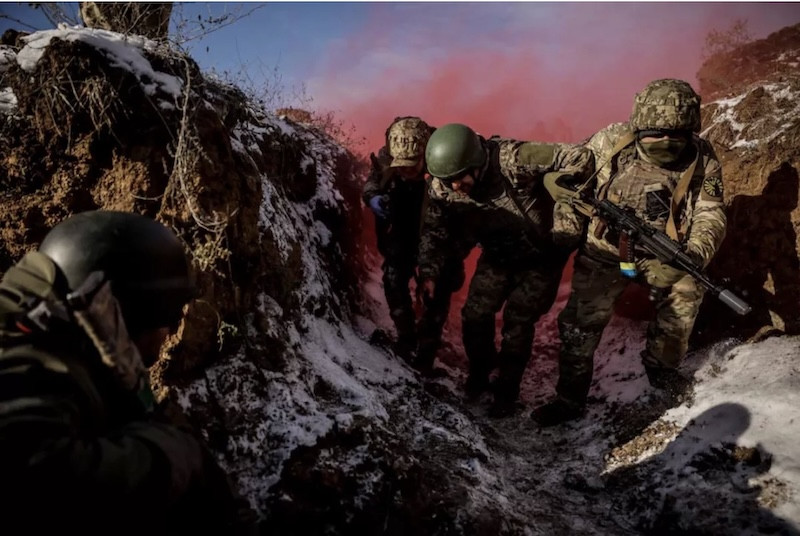
Climate change can also indirectly fuel violence. The tensions over agriculture and the exploitation of mineral resources required for energy transition play a significant role. This helps to better understand the risks of armed conflict around the world.
Extreme weather events are becoming more frequent and intense. These climate shocks not only disrupt ecosystems but also reshape social, economic, and political dynamics globally. In parallel, the transition to a low-carbon economy, while necessary, creates an unprecedented demand for mineral resources like lithium and rare earth elements. These resources are often extracted in regions already destabilized by social tensions or armed conflicts.
For example, the conflict between the Democratic Republic of Congo and Rwanda, where each accuses the other of arming rebel groups, mediated by the United States, is a prominent case. These are regions rich in cobalt and copper, experiencing prolonged droughts and increasingly heavy rains, where the majority of the population still relies on agriculture for their livelihoods.
Since 2010, economists have increasingly focused on the complex links between climate change, natural resource exploitation, and conflict risk. Today, solid results exist, despite some remaining uncertainties, providing concrete avenues to guide public policymaking.
Agriculture at the Core of Conflicts
Primarily through agriculture, the mechanism revealing violence has been highlighted. Droughts, heatwaves, and floods systematically increase the probability and intensity of violence, especially in regions dependent on rain-fed agriculture.
This plays out through several mechanisms:
– Declining agricultural income can make joining armed groups more attractive; – Resource scarcity can intensify competition between communities; – Heat itself can increase aggressiveness, even in urban areas.
The causality can also work in reverse. Indeed, conflicts often degrade the environment: illegal mining, expansion of illegal drug-producing crops (e.g., poppy or coca), deforestation, infrastructure destruction, river pollution, and more.
Vicious cycles are set in motion where environmental deterioration and violence mutually reinforce each other.
When Green Transition Exacerbates Violence
As climate shocks redefine local opportunities, the rise in natural resource prices increases the stakes of conflict. Increases in oil and metal prices have often intensified violence in production zones, especially with intensive capital extraction leading to resource plundering. The green transition risks exacerbating these dynamics.
The demand for “transition minerals” (also known as critical minerals) is increasing rapidly, threatening to amplify this form of rapacity in certain regions, while fossil fuel revenues decrease elsewhere.
The precise mechanisms by which mining activity triggers conflicts also depend on the type of exploitation. In artisanal mining, local population employment plays a much more significant role than in industrial mining. Additionally, pollution from mineral extraction — especially water contamination — can reduce agricultural yields far beyond mining sites. Livelihoods are lost, thus doubly fueling conflict risks.
Risk factors often overlap, with drought-prone regions frequently above mineral deposits. Climate risks and resource-related risks may mutually worsen to trigger violence, even though these complementarities are not yet well understood.
How to Mitigate Risks?
What public policies could mitigate conflict risks? Through rigorous evaluations, effective measures have been identified that could prove most efficient. Individual insurance and social protection, initially, can sever the link between droughts and recruitment by armed groups.
However, their proper design is crucial: insurance stabilizing incomes in bad years may inadvertently encourage predation in good harvests. This calls for careful contract design and credible monitoring mechanisms.
Irrigation, the choice of drought-resistant seeds, and transport infrastructure development can also mitigate local weather shocks and reduce famine risks. However, roads and markets can also enable armed groups to tax trade or move contraband goods. Infrastructure choices should, therefore, be accompanied by strengthened governance.
Even with these protections, some shocks will still require rapid humanitarian aid. Targeting and timing of deployment are crucial. Evidence on whether it mitigates or exacerbates violence is mixed, emphasizing the need for early warning systems and evaluation of distribution models.
Regulating mineral extraction and sharing benefits credibly are also essential. Transparency and certification can reduce armed group financing in some contexts: industrial or artisanal nature of exploitation, proximity to borders, or state capacity, for example. Additional measures also count: local revenue sharing, information campaigns setting realistic expectations, and centralized management of water and forests can enhance the positive effects of well-designed regulation and reduce political capture possibilities.
Two clarifications are necessary at this stage.
1. Mitigating conflict risks through public actions is costly. However, much of these measures cost less than prolonged conflict and can bring additional benefits in terms of economic growth. 2. Effective policy design requires additional scientific evidence. Factors like biodiversity loss or migrations are understudied causes of conflicts. Scientific knowledge on these topics sometimes struggles to keep pace with political debates.