The Internet Archive opens a Swiss relay at a time when digital memory faces two vulnerabilities: the erasure of collections exposed to conflicts, disasters, or censorship, and the rapid disappearance of artificial intelligence systems that already influence knowledge production.
The new entity operates independently within its national framework while remaining aligned with Brewster Kahle’s historical objective formulated in 1996: universal access to all knowledge. Its website clarifies that it collects and preserves digital information for learning and research, in response to the volatility of formats, rapid content deletions, and diminishing open access.
A distributed digital memory now exists.
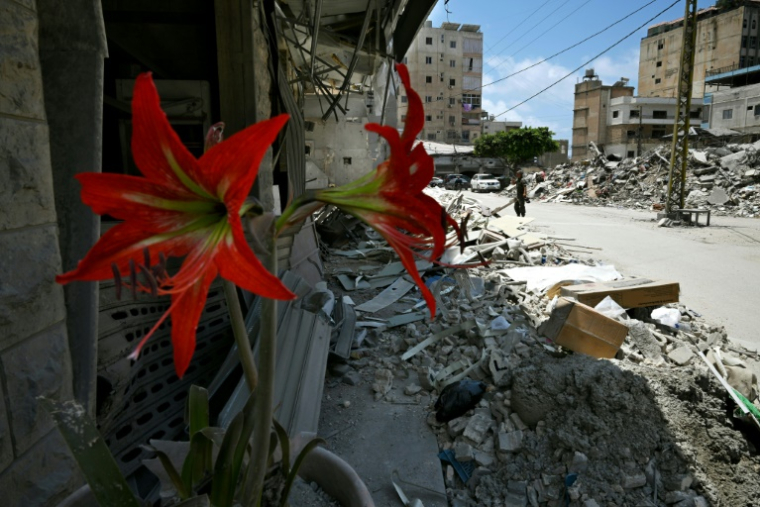
The first initiative, focused on endangered collections, targets vulnerable archives. The foundation indicates it is working with UNESCO and other partners to offer a secure digital refuge for threatened documents. An upcoming UNESCO conference in Paris in November 2026 marks the first public step in this direction.
The second focus is on regenerative artificial intelligence. In collaboration with the School of Computer Science at the University of St. Gallen, under the direction of Professor Damian Borth, the structure supports a project to preserve snapshots of AI models, their responses, knowledge, and behaviors. The challenge lies in their instability, where an updated or removed model often leaves no trace.
Saint-Gallen also adds a heritage dimension. The foundation highlights that the abbey’s archives, which hosted the launch on May 5, embody over a thousand years of preservation. Executive director Roman Griesfelder summarizes this choice as a place well-suited to advance the preservation of universal knowledge, where stability and innovation go hand in hand.
A sensitive subject for publishing.
For industry professionals, this expansion comes after years of conflict between the Internet Archive and American publishers. Actualitte had followed the legal dispute opened in 2020 by Hachette, HarperCollins, Wiley, and Penguin Random House regarding digital pricing control, and its unfavorable conclusion for the organization in terms of copyright and digital distribution.
The opening of a Swiss center does not reopen this legal case; it shifts the focus towards memory infrastructures. Alongside Internet Archive Canada and Internet Archive Europe, the St. Gallen-based foundation places the cultural data preservation within a more distributed network, where legal stability, university partnerships, and protection of fragile collections become conditions for sustainable access.
Photo credits: illustration, John Blyberg, CC BY 2.0
By Cécile Mazin Contact: cm@actualitte.com