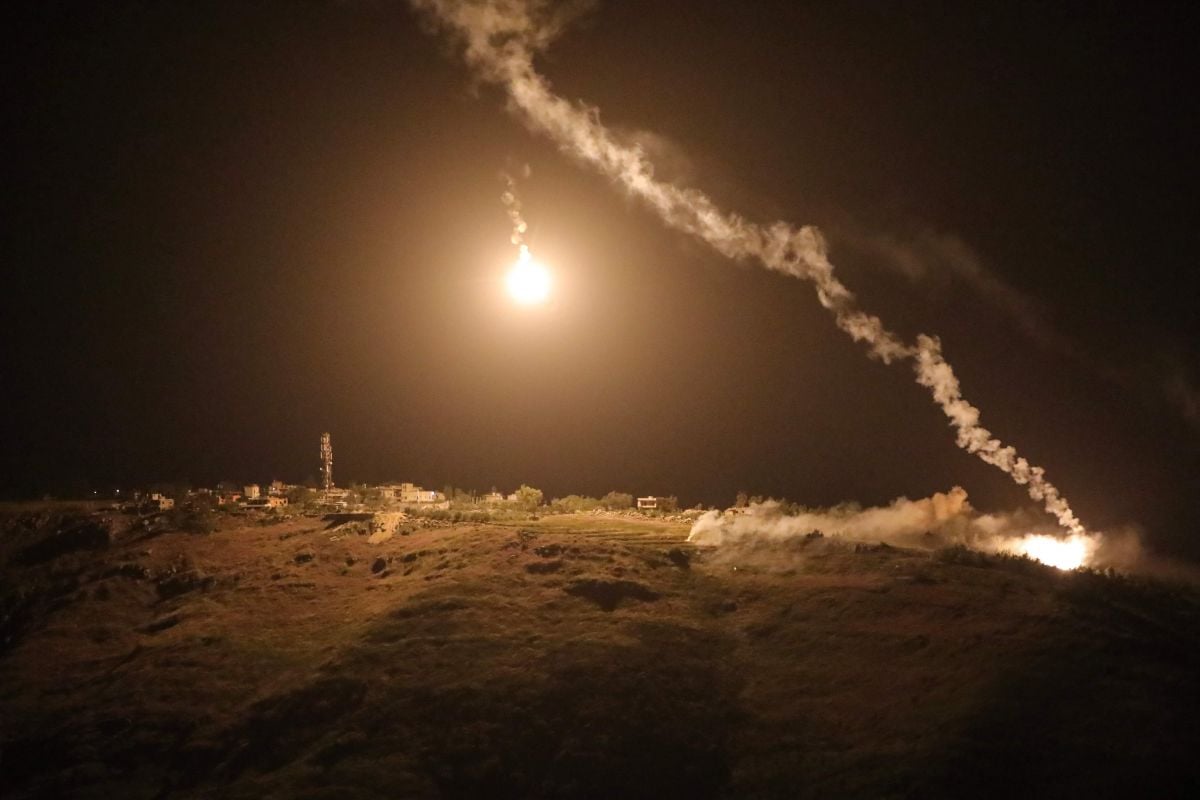
The invasion of Ukraine by Russia in February 2022 has completely reshuffled the cards of European geopolitics. The era of peace that we have known for over 80 years is cracking, accentuated by other conflicts, notably in the Middle East.
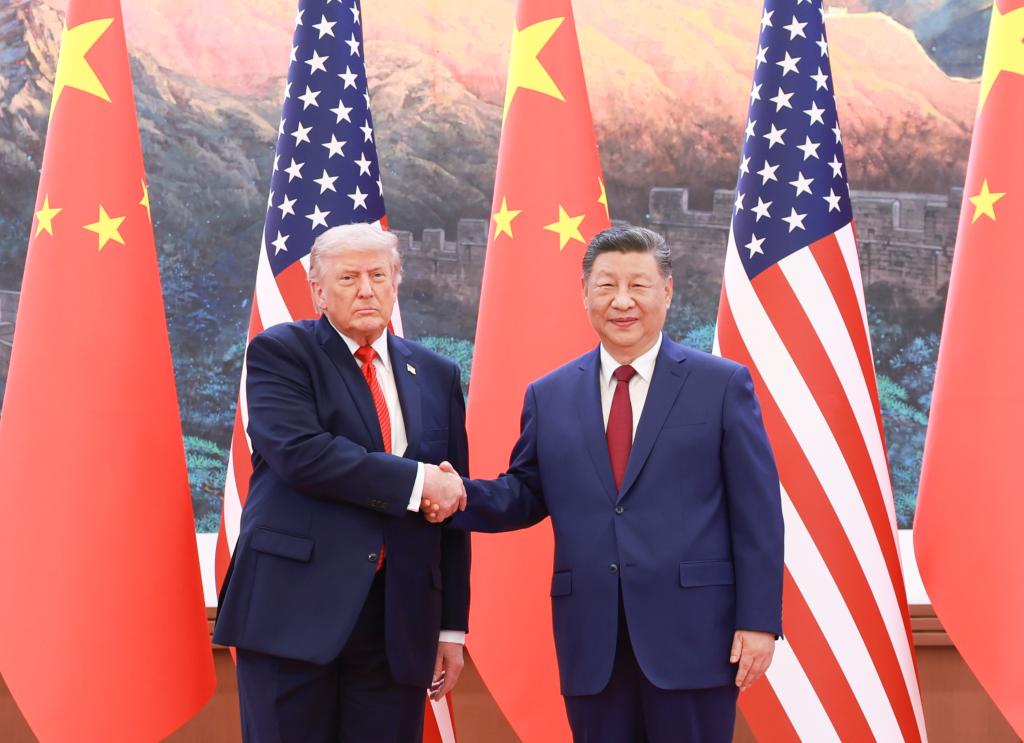
Moreover, the arrival of Donald Trump at the White House and his provocations against European interests have sparked a desire to return to sovereignty in defense matters. An atmosphere that is prompting awareness for countries in the Old Continent: investments in armaments must be increased.
Thus, in the past ten years, France has doubled the budget for the armed forces to reach 413 billion euros by 2026 under the current military planning law. The same goes for Germany, which will be able to spend a total of 524.5 billion euros, including 108.2 billion euros for defense, a record since the end of the Cold War.
In this context of tension and reinvestment in armaments, automobile manufacturers are being called upon to contribute to the war effort. They are therefore making numerous announcements, starting with the Renault group, which announced in February 2026 that it could develop a production of 600 drones in less than a year at its site in Le Mans, in partnership with the company Turgis Gaillard. A contract called Chorus, which aims to manufacture impact-detonating drones. The role of the French manufacturer is primarily to produce the structure, without the military device that composes it.
Across the Rhine, German manufacturers are not lagging behind. At a congress in Frankfurt on March 27, 2026, Oliver Blume, president of Volkswagen, mentioned “a significant delay to catch up on” in defense matters. Thus, the Wolfsburg group is in talks with “anti-missile defense” companies to convert its Osnabrück plant.
The site in Lower Saxony is set to stop producing vehicles by 2027 as part of a group’s cost-saving plan. The idea is not to produce “weapon systems” but equipment for “military transport.” Volkswagen is also reportedly negotiating with Rafael Advanced Defense Systems, the Israeli company that designed the Iron Dome.
On the other hand, the holding company Porsche has announced an investment of 100 million euros in a defense fund, betting on the growth potential of the sector, aiming to contribute to “Europe’s technological sovereignty.”
…
Reciprocal Interests
The convergence between the defense and automotive sectors, increasingly intimate, is not trivial. Since the end of the Cold War, the production of military equipment has collapsed as Europeans have drastically reduced their defense investments. Countries now favor lower volumes but with a high level of precision and efficiency.
“The defense industry works on long-term programs – often 10, 20, or even 30 years, like the Scorpion program, with extremely high requirements. And above all, the volumes are incomparable: we are talking about a few hundred or thousand units for a military vehicle, compared to hundreds of thousands in the automotive industry,” explains the Groupement des industries françaises de défense et de sécurité terrestres et aéroterrestres (Gicat).
…
Defense Strategy for the Automotive Sector?
To address weaknesses related to volumes, the automotive sector seems to check all the boxes. It perfectly fits the concept of Potential Defense Industrial Tool (POID). “All companies that produce machine tools, automobiles, and industrial chains are potential suppliers of components, subcomponents, or finished products in the defense sector,” affirms Xavier Tytelman.
In England, for example, people are tasked with listing industrial tools that could be dedicated to the defense industry. For instance, an industrial 3D printer from an aerospace producer that is only operating at 60% capacity could dedicate the remaining 40% to defense, according to the consultant.
In this sense, it is not only the manufacturers that are attracting the defense sector. Equipment manufacturers are also in the frontline. With the automotive sector having left its “Thirty Glorious Years,” reflections are underway to diversify. “The thirty years of growth are over. Today, we are working on the assumption that the global market will no longer increase. We need to find other sources of growth. We are not meant to produce expensive missiles, but components in high volumes,” explains Christophe Périllat, CEO of Valeo. “We can do extraordinary things, and the defense industry probably needs this expertise, especially for producing drones. So we have joined the drone pact and are talking to all drone operators. Did you know that all drone engines in the world are Chinese? Does this not raise questions about sovereignty?” he adds.
Interest in defense for the automotive sector is significant. However, is it reciprocal? As specified by Gicat: defense is not a goldmine for civilian companies. “Margins are relatively tight, around 9% on average, and constraints are strong: technical requirements, certifications, sovereignty, and sometimes long decision-making times,” details the Gicat spokesperson.
…
A Diversification Strategy for the Automotive Sector?
To address weaknesses related to volumes, the automotive sector seems to check all the boxes. It perfectly fits the concept of Potential Defense Industrial Tool (POID). “All companies that produce machine tools, automobiles, and industrial chains are potential suppliers of components, subcomponents, or finished products in the defense sector,” affirms Xavier Tytelman.
In England, for example, people are tasked with listing industrial tools that could be dedicated to the defense industry. For instance, an industrial 3D printer from an aerospace producer that is only operating at 60% capacity could dedicate the remaining 40% to defense, according to the consultant.
In this sense, it is not only the manufacturers that are attracting the defense sector. Equipment manufacturers are also in the frontline. With the automotive sector having left its “Thirty Glorious Years,” reflections are underway to diversify. “The thirty years of growth are over. Today, we are working on the assumption that the global market will no longer increase. We need to find other sources of growth. We are not meant to produce expensive missiles, but components in high volumes,” explains Christophe Périllat, CEO of Valeo. “We can do extraordinary things, and the defense industry probably needs this expertise, especially for producing drones. So we have joined the drone pact and are talking to all drone operators. Did you know that all drone engines in the world are Chinese? Does this not raise questions about sovereignty?” he adds.
Interest in defense for the automotive sector is significant. However, is it reciprocal? As specified by Gicat: defense is not a goldmine for civilian companies. “Margins are relatively tight, around 9% on average, and constraints are strong: technical requirements, certifications, sovereignty, and sometimes long decision-making times,” details the Gicat spokesperson.
…
Conclusion
This convergence between the two sectors is not a long-term strategy but more of a short-term tactic. It is an opportunity to please from a public perspective, but also to offset costs. When there is an excess of industrial capacity compared to what is sold and produced, defense is an alternative to avoid closing sites while waiting for the day when the European Commission and Parliament return to reason to promote industry in the Old Continent. The involvement of the automotive sector should not replace the rise of the defense industry,” Arnaud Aymé.
Allowing defense industry players to utilize dedicated automotive plants is an opportunity to keep sites active until the market recovers.