
US and Iran hold marathon talks in Islamabad on truce deal
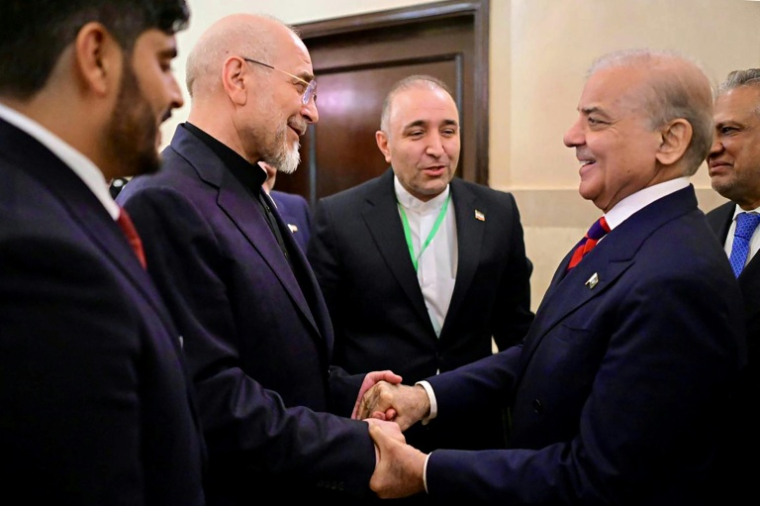
Pakistan Prime Minister Shehbaz Sharif (right) greets Iranian Parliament leader Mohammad Bagher Ghalibaf, April 11, 2026 in Islamabad
Nearly 15 hours: senior Iranian and American officials held marathon negotiations that will continue on Sunday in Islamabad, seeking an agreement on a sustainable truce in a conflict shaking the global economy.
These unprecedented discussions between the two enemy countries since the 1979 Islamic Revolution are being held in a trilateral format, according to the White House, with the presence of Pakistani officials who facilitated the conclusion of a two-week ceasefire, which took effect on Wednesday.
The talks on Saturday lasted nearly 15 hours into the night, held at a large hotel in the Pakistani capital away from the cohort of foreign journalists covering the event.
Both sides were set to take a several-hour break before dawn.
“We are in advanced negotiations with Iran. We are winning regardless, we have defeated them militarily,” US President Donald Trump assured on Saturday, stating that it didn’t matter to him whether an agreement was reached or not.
The American delegation is led by Vice President JD Vance, accompanied by Special Envoy Steve Witkoff and Jared Kushner, son-in-law of President Donald Trump. Iran is notably represented by influential Parliament President Mohammad Bagher Ghalibaf and Foreign Minister Abbas Araghchi, leading a large delegation of 70 people.
– “Clearing” the strait –
A Pakistani official assured that “talks are progressing in the right direction.” “The overall atmosphere is cordial,” the official told AFP on condition of anonymity.
However, no images from the discussions have been released.
At the center of the talks is the Strait of Hormuz, a strategic passage for hydrocarbon supply, effectively blocked since the beginning of the conflict, with cascading consequences on the global economy, from shortages to price hikes.
Iranian media indicated that the American side had made “excessive” demands on this issue during the discussions.
The US military said on Saturday that two of its destroyers had crossed the Strait of Hormuz in a pre-clearing operation. “We are clearing the strait,” added Donald Trump.
Iran’s Revolutionary Guards, the ideological army of the Islamic Republic of Iran, warned on Sunday that they would act with “severity” against military ships passing through the strait.
– Numerous disputes –
Triggered on February 28 by an Israeli-American offensive against Iran, the war has claimed thousands of lives, mainly in Iran and Lebanon.
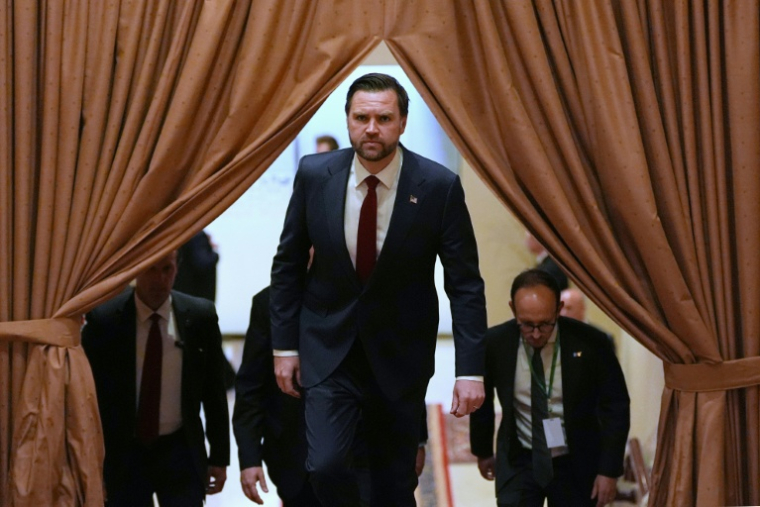
US Vice President JD Vance, April 11, 2026 in Islamabad
There remains a significant rift between the two belligerents on key issues, including Hormuz, sanctions against the Islamic Republic, and Lebanon where Israel is at war with the pro-Iranian Hezbollah.
Among the “progress” mentioned on Saturday, Iranian agencies Fars and Tasnim referred to the “US acceptance of the release of Iranian assets and the need for more in-depth technical and expert discussions on this matter.” Shortly before, a senior US official had denied that Washington had agreed to unfreeze these assets.
The meeting is closely followed by other actors involved in diplomatic efforts: Egypt, Turkey, and China, with which Pakistan is coordinating.
Pakistan’s Prime Minister Shehbaz Sharif emphasized that the upcoming stage would be “challenging” to “establish a sustainable truce.” “This stage is what is known in English as ‘make or break’,” he added.
In Iran, where internet blackout was imposed by authorities, residents expressed doubts. “We shouldn’t take Trump so seriously. He wants to wipe out a civilization and, twelve hours later, implements a ceasefire that is not based on anything,” summarized a 30-year-old resident.
– Over 2,000 deaths in Lebanon –
After the ceasefire came into effect, Israel claimed that Lebanon, where it fights Hezbollah, was not included in the agreement.
On Saturday, Israeli strikes in southern Lebanon killed a total of 18 people, according to the Health Ministry, while the Israeli army announced hitting over 200 Hezbollah targets in the last 24 hours.
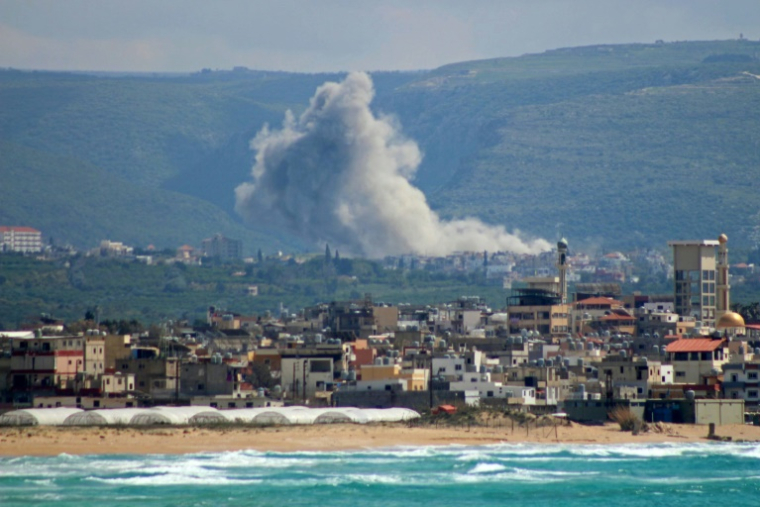
Smoke rising from a site in the village of Qlaileh in southern Lebanon, April 11, 2026
On Wednesday, Israel conducted the deadliest strikes of this war in Lebanon, with at least 357 killed in a single day, according to the latest count. Lebanese authorities said on Saturday there have been 2,020 deaths and 6,436 injuries since March 2.
According to the Lebanese presidency, talks are scheduled for Tuesday between Lebanon and Israel in Washington, which were rejected by Hezbollah.
Prime Minister Benjamin Netanyahu said on Saturday evening that he wants a peace agreement “that will last for generations.”
He also stated that his country had “disrupted” Iranian nuclear and ballistic programs and that Iran and its allies “are fighting for their survival.”
/2026/06/14/6a2f1deba7808126968939.jpg "Guerre au Moyen-Orient : un accord de paix a été conclu entre les Etats-Unis et l'Iran, annoncent Donald Trump et le médiateur pakistanais")



/2026/06/15/6a2f24d55a018575541781.jpg "Coupe du monde 2026 : le Japon tient les Pays-Bas en échec et soffre un point précieux au terme dun match nul spectaculaire")
