At the beginning of April, the Minister of Culture appointed a new figure to her cabinet by decree. This also created a new position, that of advisor for artificial intelligence and digital, entrusted to Laurent Gaveau, who was the founder and director of the Google Cultural Institute for 10 years.
Before his time at Google, he was the deputy director of communication at the Palace of Versailles (between 2008 and 2013), where Catherine Pégard was the president from 2011 to 2024. This detail may explain the Minister of Culture’s choice to appoint another former colleague, Hélène Dalifard, as press and communication advisor.
The arrival of Laurent Gaveau, especially in light of his background at the American multinational, raises questions about his influence on the political orientations at the Ministry of Culture. Google is known to heavily invest efforts to influence public policies in various fields. In 2024, the company spent between 1.75 and 2 million euros and mobilized 23 people to influence public decision-makers.
The involvement of Google, through a former employee, in the Ministry of Culture may raise legitimate concerns, especially since negotiations were recently supervised by the Ministry between rights holders and AI tool developers. When asked, the Ministry of Culture informed us that “Laurent Gaveau has experience in both the public and private sectors, with the consistency of putting technology at the service of culture, its preservation, and democratization. The minister believed that this dual perspective and extensive expertise could be useful in facing the immense impact of AI and digital in the cultural field.”
No Influence on Debates
His status as the founder and former director of the Google Cultural Institute (the Google Arts & Culture Lab, based in Paris) is seen as an asset because the project is “non-commercial, respects copyright, and brings together more than 3000 public and private partners in nearly 80 countries,” according to the ministry.
When asked about the possibility of influence on negotiations between rights holders and AI developers, the ministry dismissed this notion, stating, “In no way: the minister and the entire cabinet are determined to facilitate these negotiations and do everything possible to ensure fair compensation for creators.” It was also mentioned that “personally, Laurent Gaveau has never hidden his belief that the tech world cannot regulate itself, and that it is the role of public authorities to uphold the general interest and protect creation.”
However, it is worth noting that the debate at the Senate on a proposal regarding the presumption of use of cultural content by AI providers led to a change in the ministry’s stance on the issue.
In the past, Rachida Dati had a firm tone, stating, “I do not know if shifting the burden of proof would be the best solution for rights holders, but if we have to consider it, I am ready to study with parliament the possibility of shifting the burden of proof as mentioned in the Creation and AI report,” she said in October 2025, as discussions between rights holders and AI providers stalled. The government’s support for the proposed law seemed plausible, even though the Ministry of Economy was less inclined to regulate the sector.
On April 8, during the debate, the government left the decision to the wisdom of the upper house of Parliament without expressing a favorable or unfavorable opinion. The Ministry of Culture supported this move, emphasizing that the proposed law was a starting point, not the final decision.
“The government will encourage and facilitate negotiations and agreements by supporting this new and essential relationship among all cultural actors,” Catherine Pégard explained to justify the government’s prudent stance.
The High Authority for Transparency in Public Life (HATVP) has been contacted by the Ministry of Culture to prevent any conflict of interest related to this appointment. At the moment, the HATVP’s opinion has not been made public on their website.
The National Union of Publishers declined to comment on Laurent Gaveau’s appointment when approached, and the Permanent Council of Writers did not respond to our inquiry.
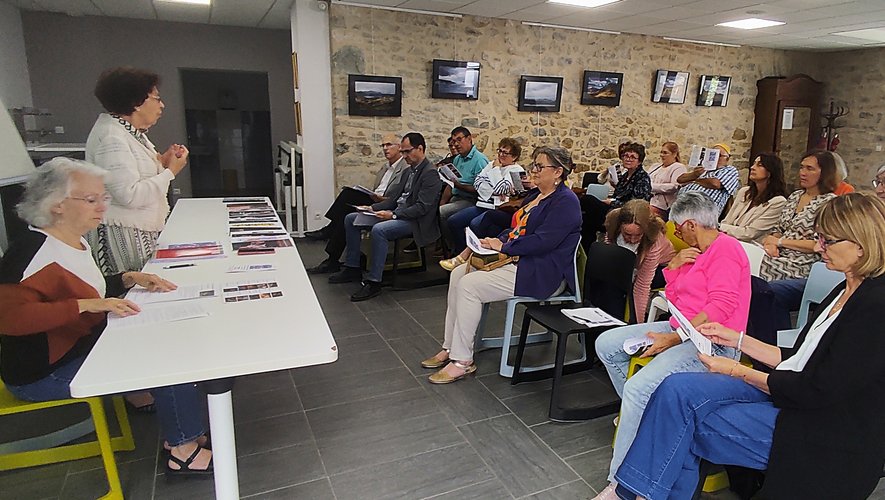
Photo: illustration, ActuaLitté, CC BY SA 2.0
By Antoine Oury
Contact: ao@actualitte.com