Will Steam Deck 2 be equipped with a commercial AMD chip instead of a Custom version? I don’t comment on rumors in general, because it doesn’t advance much. The only gain in doing so is, most of the time, making the person who comments look like an idiot and wasting their time for those who are reading.
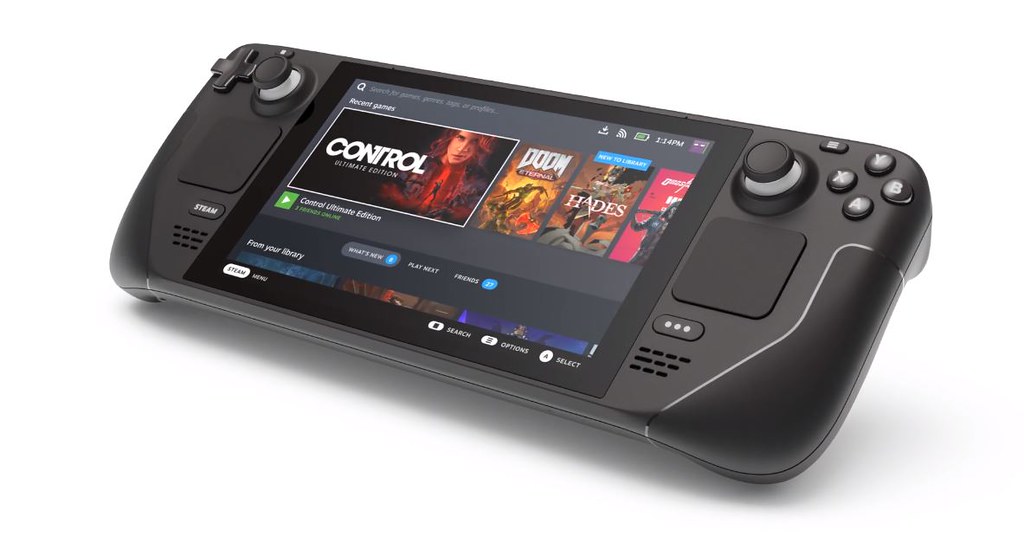
Why comment on this rumor of a Steam Deck 2 under a “classic” AMD chip? Because it goes a little further than simple processor sleight of hand. It would be a huge game changer for the PC console market, for the evolution of SteamOS and also for the Linux world. The rumor comes to us from an Internet user known for numerous leaks. Nicknamed KeplerL2, he published information according to which Valve would consider presenting a Steam Deck 2 in 2028. A new version which would be equipped with a commercial AMD processor, all that is most classic.
The original Steam Deck console, like its “refresh” OLED version, were built with AMD Custom chips. The processor brand has an entire department whose job is to meet the specific needs of the industry. With precise specifications of its needs and a sufficiently funded bank account, AMS engineers begin to build the chip you need from the technical bricks you choose. This makes it possible to respond to very specific requests and tick as many technical boxes as possible.
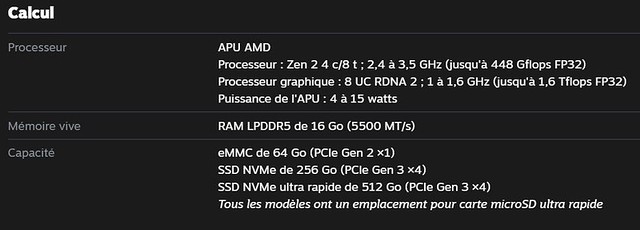
Steam Deck 1: a custom-made Zen 2 chip
When the first Steam Deck was released, it was almost an obligatory step for Valve. The market did not then have really suitable chips. Today, the situation has changed and many commercial chips from AMD drive competing devices. Some of which received a full port of SteamOS. Recent developments in Valve’s system are therefore both compatible with its Custom chip and commercial processors.
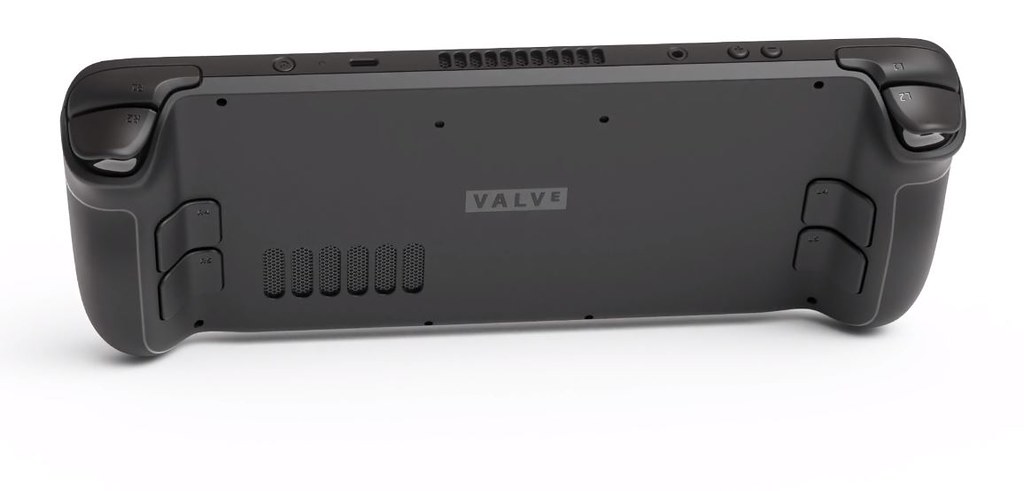
Steam Deck 2 currently being developed
We imagine that meetings between Valve and AMD have never stopped since the launch of the first console. Optimizations, technical updates, information sharing and… obviously a new model in the crosshairs. The negotiations between the different brands and Valve to obtain SteamOS also left AMD in the loop. Impossible to think software without thinking hardware for a gaming machine.
And I can easily imagine that the current tripping up of the components market in the consumer IT world must have seriously disrupted the schedules. I’m not sure that without the collapse in prices for memory, storage and other processors, Valve would not have already started talking about Steam Deck 2. Just as subscribers who have been absent for weeks would not have missed the first version. Same observation for the Steam Machine which seems to have well and truly missed its schedule. Never mind, if the second version of the mobile console has to be delayed, we might as well move directly to the post-crisis period as hoped. Aiming for 2028 therefore seems a good compromise.
Waiting would have too many consequences
In computing, you can’t wait without failing, an engineer from Nvidia told me a long time ago. You have to keep up, even if it means working in the wind. Waiting is the best way to miss the innovation train. This is why I think that a Steam Deck 2 with a commercial chip seems credible to me. Carrying out, that is to say financing, the efforts of constant development from 2026 to 2028 at AMD would probably be very costly for Valve. If tailor-made development work has already been undertaken today, continue to follow the pace of their development while AMD continues to develop its ranges. Ryzen wouldn’t make sense.
On the other hand, stopping work on a Custom chip would be the best way to end up with an outdated product when the release conditions were met again. Let’s imagine that this chip is ready today, it is impossible to release it given the state of the memory and storage market. So Valve would patiently wait for the end of the crisis while AMD continued its development for more powerful generations? Too dangerous.

Join the Central Development Channel
For Valve, adopting a classic processor from AMD’s mobile range would ultimately only have advantages. No more expensive development of a chip. A choice that was made at the start because, at the start of the prototyping of the first generation console, there was no chip adapted to these particular needs. Today this is no longer the case.
Interest is also in the development of SteamOS. No more need to offer code for different chips. By reducing the size of dedicated processors, Valve can focus on optimization. This also ensures that partner brands have a system perfectly calibrated for their own equipment. Lenovo, Asus and others were not entitled to AMD’s Custom chips. There they will play on an equal footing with Valve.
For the publisher, it is also a way to take advantage of chip manufacturing volumes instead of depending on a precise construction session at its partner TSMC. This can have important nuances on pricing.

A return to reality for Valve?
The Steam Deck adventure was glorious, instantly erasing the misfortunes of Gabe Newell’s company with the hardware and the first attempt at Steam Machines. But in recent months, the nightmare has returned. Steam Decks unavailable and a Steam Machine delayed and without visibility. This cold shower must have made people aware that hardware development can be a real source of satisfaction, and the Valve teams have traveled around the world being praised for the quality of their achievement. But also significant human and financial stress.

I wouldn’t want to be the head of hardware at Valve right now. He must have sleepless nights thinking about the hardware that makes up the Steam Machine which has been secured but which is sleeping in a warehouse due to lack of memory and storage. The desire to once again let their “partners” take the financial risks in the material direction must tickle them.
I was surprised yesterday on Bluesky and Mastodon by the presence of a banner pointing to the Steam Decks even though they have been unavailable for weeks. The impact for the publisher must be quite significant and increase with each passing week.

Especially since Valve has already succeeded in its bet. The latest statistics show that now 5% of players on Steam use a Linux system. 5%. It’s absolutely huge. If, 10 years ago, I had been told such a figure in the world, I would not have believed it. Firstly because the system was still barely visible to the general public. Then and above all because the gaming world rhymed almost exclusively with Windows. Today 5.33% of Valve users are on Linux and among them 24.48% are on SteamOS.Â
Now that the mayonnaise has set, you need to make it rise. And for this, Valve would have no better recipe than a more open ecosystem for its partners. By welcoming a commercial chip into Steam Deck 2, the publisher will facilitate the deployment of its OS, encourage more people to offer it and possibly even allow ordinary people to recycle, one day or another, a laptop or MiniPC into a game console. So many Linux devices directly connected to its online store.
Wine 11 changes gear and propels Linux to the top of gaming
AMD confirms that the Steam Machine is ready but…