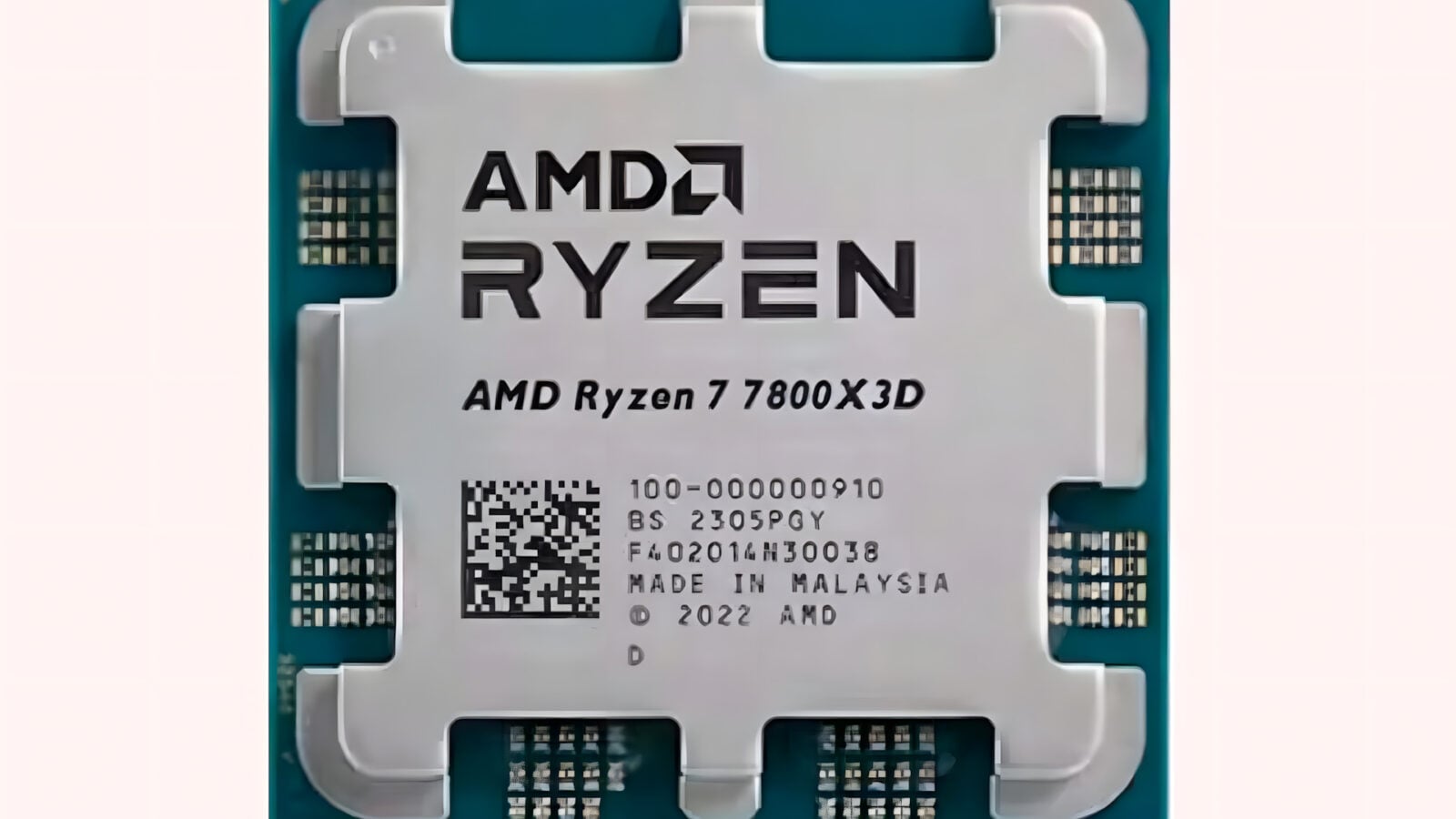
AMD has officially announced its new high-end processor, the Ryzen 9 9950X3D2 Dual Edition. This component pushes the boundaries of hardware architecture by integrating 3D V-Cache technology on its two modules (CCDs). This innovative design doubles the ultra-fast memory to reach a massive total cache volume of 208 megabytes. The global launch of this chip is set for April 22, 2026. While the manufacturer has not yet revealed a strict pricing grid, industry specialists expect a selling price around $1,000, a significant increase compared to the previous model’s $699.
Technical analysis highlights specific engineering choices. The Ryzen 9 9950X3D2 maintains the base of the classic 9950X3D, offering 16 cores and 32 threads under the Zen 5 architecture. The change lies in energy and temperature management. The new processor has a thermal design power (TDP) of 200 W, which is 30 W higher than the standard version. This increase will require the installation of highly efficient liquid cooling systems. In exchange for this dual-cache architecture, the maximum clock frequency in boost mode is slightly reduced from 5.7 GHz to 5.6 GHz.
Regarding performance, Jack Huynh, AMD’s vice president, announces measured gains of 5 to 10% compared to the current 9950X3D. The company details shortened processing times by 13% for tasks related to artificial intelligence and physical simulations. Code compilation under engines like Unreal Engine accelerates by 8%. The direct access to 192 MB of L3 cache (coupled with 16 MB of L2 cache) massively streamlines the handling of heavy data on demanding software environments such as Blender, Chromium, or DaVinci Resolve.
Despite the X3D designation historically associated with the gaming market, AMD’s approach now targets creative professionals. With this massive technological deployment, Intel is under pressure in the ultra-premium segment. The rival processor maker has responded with an opposing strategy, launching its Arrow Lake Plus processors at very aggressive prices to attract the general public and limit losses on volumes. AMD’s strategy ignores this price war and strictly focuses on developers requiring a workstation without any bottlenecks. This processor ultimately serves as a technological showcase, reserved for a niche of experts capable of absorbing its cost.