(function() {
try {
var cs = document.currentScript,
p = (document.cookie.split(‘gnt_i=’)[1] || ”) + ‘;’,
l = p.substring(p.indexOf(‘~’) – 2, p.indexOf(‘;’));
if (!l) {
var n = window.performance && performance.getEntriesByType(‘navigation’) || [],
st = n[0].serverTiming || ”;
if (st.length) {
for (const t of st) {
if (t.name === ‘gnt_i’) {
l = t.description.split(‘*’)[2];
break;
}
}
}
}
if (l) {
var g = decodeURIComponent(l).split(‘~’);
comply({
country: g[0],
city: g[2],
zipcode: g[3],
state: g[1]
});
} else {
comply();
}
} catch(e) {
comply();
}
function comply(loc) {
if(window.ga_privacy) return;
loc = loc || {};
var host = window.location.hostname || ”,
eu = host.split(‘.’)[0] === ‘eu’,
cco = hp(‘gnt-t-gc’),
sco = hp(‘gnt-t-gs’),
cc = cco || loc.country || (eu ? ‘ES’ : ‘US’),
sc = sco || loc.state || (cc === ‘US’ ? ‘CA’ : ”),
t = true,
gdprLoc = {‘AT’: t, ‘BE’: t, ‘BG’: t, ‘HR’: t, ‘CY’: t, ‘CZ’: t, ‘DK’: t, ‘EE’: t, ‘EL’: t, ‘EU’: t, ‘FI’: t, ‘FR’: t, ‘DE’: t, ‘GR’: t, ‘HU’: t, ‘IE’: t, ‘IT’: t, ‘LV’: t, ‘LT’: t, ‘LU’: t, ‘MT’: t, ‘NL’: t, ‘PL’: t, ‘PT’: t, ‘RO’: t, ‘SK’: t, ‘SI’: t, ‘ES’: t, ‘SE’: t, ‘NO’: t, ‘LI’: t, ‘IS’: t, ‘AD’: t, ‘AI’: t, ‘AQ’: t, ‘AW’: t, ‘AX’: t, ‘BL’: t, ‘BM’: t, ‘BQ’: t, ‘CH’: t, ‘CW’: t, ‘DG’: t, ‘EA’: t, ‘FK’: t, ‘GB’: t, ‘GF’: t, ‘GG’: t, ‘GI’: t, ‘GL’: t, ‘GP’: t, ‘GS’: t, ‘IC’: t, ‘IO’: t, ‘JE’: t, ‘KY’: t, ‘MC’: t, ‘ME’: t, ‘MS’: t, ‘MF’: t, ‘MQ’: t, ‘NC’: t, ‘PF’: t, ‘PM’: t, ‘PN’: t, ‘RE’: t, ‘SH’: t, ‘SM’: t, ‘SX’: t, ‘TC’: t, ‘TF’: t, ‘UK’: t, ‘VA’: t, ‘VG’: t, ‘WF’: t, ‘YT’: t},
gdpr = !!(eu || gdprLoc[cc]), gppLoc = {‘CA’: ‘usca’, ‘NV’: ‘usca’, ‘UT’: ‘usnat’, ‘CO’: ‘usco’, ‘CT’: ‘usct’, ‘VA’: ‘usva’, ‘FL’: ‘usnat’, ‘MD’: ‘usnat’,’MN’: ‘usnat’, ‘MT’: ‘usnat’, ‘OR’: ‘usnat’, ‘TN’: ‘usnat’, ‘TX’: ‘worn’, ‘DE’: ‘worn’, ‘IA’: ‘worn’, ‘NE’: ‘worn’, ‘NH’: ‘worn’, ‘NJ’: ‘worn’, ‘IN’: ‘worn’, ‘KY’: ‘worn’, ‘RI’: ‘worn’}, gpp = !gdpr && gppLoc[sc];
if (gdpr && !window.__tcfapi) {
“use strict”;function _typeof(t){return(_typeof=”function”==typeof Symbol&&”symbol”==typeof Symbol.iterator?function(t){return typeof t}:function(t){return t&&”function”==typeof Symbol&&t.constructor===Symbol&&t!==Symbol.prototype?”symbol”:typeof t})(t)}!function(){var t=function(){var t,e,o=[],n=window,r=n;for(;r;){try{if(r.frames.__tcfapiLocator){t=r;break}}catch(t){}if(r===n.top)break;r=r.parent}t||(!function t(){var e=n.document,o=!!n.frames.__tcfapiLocator;if(!o)if(e.body){var r=e.createElement(“iframe”);r.style.cssText=”display:none”,r.name=”__tcfapiLocator”,e.body.appendChild(r)}else setTimeout(t,5);return!o}(),n.__tcfapi=function(){for(var t=arguments.length,n=new Array(t),r=0;r3&&2===parseInt(n[1],10)&&”boolean”==typeof n[3]&&(e=n[3],”function”==typeof n[2]&&n[2](“set”,!0)):”ping”===n[0]?”function”==typeof n[2]&&n[2]({gdprApplies:e,cmpLoaded:!1,cmpStatus:”stub”}):o.push(n)},n.addEventListener(“message”,(function(t){var e=”string”==typeof t.data,o={};if(e)try{o=JSON.parse(t.data)}catch(t){}else o=t.data;var n=”object”===_typeof(o)&&null!==o?o.__tcfapiCall:null;n&&window.__tcfapi(n.command,n.version,(function(o,r){var a={__tcfapiReturn:{returnValue:o,success:r,callId:n.callId}};t&&t.source&&t.source.postMessage&&t.source.postMessage(e?JSON.stringify(a):a,”*”)}),n.parameter)}),!1))};”undefined”!=typeof module?module.exports=t:t()}();
}
if (gpp && !window.__gpp) {
window.__gpp_addFrame=function(e){if(!window.frames[e])if(document.body){var p=document.createElement(“iframe”);p.style.cssText=”display:none”,p.name=e,document.body.appendChild(p)}else window.setTimeout(window.__gppaddFrame,10,e)},window.__gpp_stub=function(){var e=arguments;if(__gpp.queue=__gpp.queue||[],!e.length)return __gpp.queue;var p,n=e[0],t=1function OptanonWrapper() { }Skip to main content

(function() {
let vdContainer, vdShow, vdHide,
flagCaption = false,
vdToggle = document.getElementById(‘videoDetailsToggle’),
section = ga_data.route.sectionName || ga_data.route.ssts.split(‘/’)[0],
subsection = ga_data.route.ssts.split(‘/’)[1];
vdToggle.addEventListener(‘click’, ()=> {
// query dom only after user click
if (!vdContainer) {
vdContainer = document.getElementById(‘videoDetailsContainer’);
vdShow = document.getElementById(‘vdt_show’),
vdHide = document.getElementById(‘vdt_hide’);
}
vdContainer.hidden = !(vdContainer.hidden);
// show/hide elements
if (vdContainer.hidden) {
vdShow.hidden = false;
vdHide.hidden = true;
} else {
if (!flagCaption) {
flagCaption = true;
fireCaptionAnalytics()
}
vdShow.hidden = true;
vdHide.hidden = false;
}
});
function fireCaptionAnalytics () {
let analytics = document.getElementById(“pageAnalytics”);
try {
if (analytics) {
analytics.fireEvent(`${ga_data.route.basePageType}|${section}|${subsection}|streamline|expandCaption`);
} else {
if (window.newrelic) window.newrelic.noticeError(‘page analytics tag not found’);
}
} catch (e) {
if (window.newrelic) window.newrelic.noticeError(e);
}
}
}());
The Artemis II astronauts are officially on their way back home to Earth after their groundbreaking journey, becoming the first humans in more than 50 years to travel near Earth’s celestial neighbor.
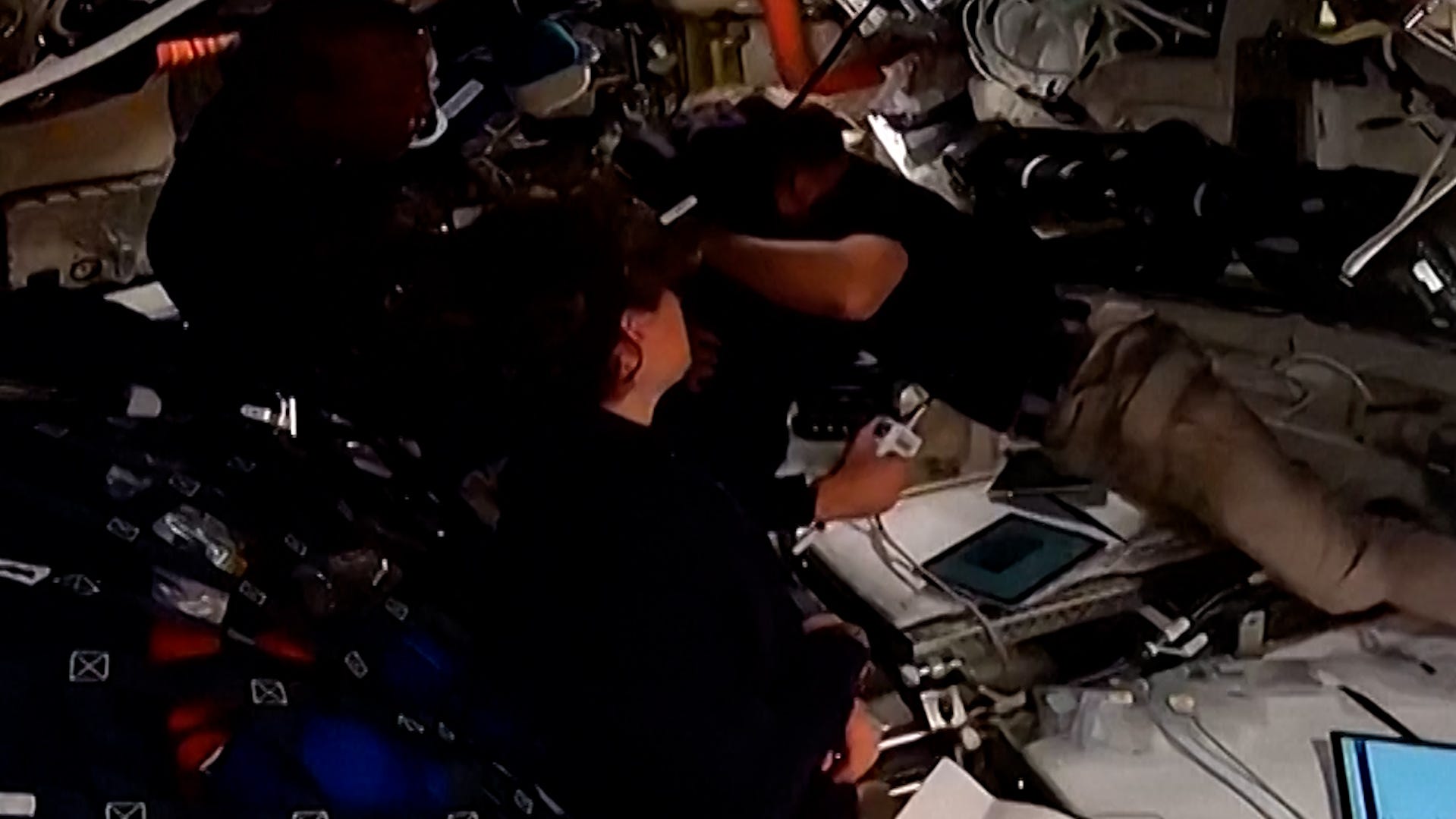
On Monday, the four astronauts made observations of the moon’s far side, which is permanently faced away from Earth. This, lunar flyby, as it’s called, brought astronauts Reid Wiseman, Christina Koch and Victor Glover of NASA, as well as Jeremy Hansen of the Canadian Space Agency, on a trailblazing journey, traveling the farthest any human has been from Earth.
The crew members are now making the days-long journey back home as they prepare for NASA’s Orion capsule to make a water landing off the coast of California.
Here’s what to know about the crew’s journey home, how to use NASA’s official tracker and what to know about the crew’s commander, who graduated from college in our very own Empire State.
NY graduate aboard Artemis II. Who is NASA Astronaut Reid Wiseman
The commander of NASA’s Artemis II mission to the moon is a New York college grad!
Reid Wiseman, 44, graduated from Rensselaer Polytechnic Institute in Troy, New York in 1997, according to NASA. He got his undergraduate degree in Science in New York before getting his Master of Science degree in Systems Engineering in his home city, Baltimore.
Wiseman was selected as a NASA astronaut in 2009Â and was the commander of the NEEM021 at the Aquarius Reef Habitat off Islamorada, Florida, in July 2016, according to NASA.
On Monday, the Artemis crew shared an emotional moment as they named a crater they spotted from the Orion capsule after Wiseman’s late wife, Carroll Wiseman, who was 46 years old when she lost a five-year battle with cancer on May 17, 2020.
“We would like to call it Carroll,” said mission specialist Jeremy Hansen, his voice cracking as Wiseman patted his shoulder and wiped his tears.
“A number of years ago we started this journey, in our close-knit astronaut family we lost a loved one,†Hansen said to Mission Control in Houston, adding that the crater “is in a really neat place on the moon.”
Did Artemis II make it to the moon? How far are astronauts from Earth?
Artemis II astronauts are officially on their way back to Earth after swinging around the moon’s far side.
As of Tuesday afternoon, April 7, the moon is now about 38,200 miles behind the Orion spacecraft the crew members are aboard, with Earth still 234,800 miles away, according to NASA’s online tracker.
Artemis II tracker. Follow moon mission location
Want to follow the astronauts as they make their way home along the Artemis II lunar journey?
NASA has an Artemis II tracker available online and on its mobile app that allows users to see where Orion is, how fast it’s traveling and how far the spacecraft is from both the Earth and the moon.
The mobile version for smartphones even includes an augmented reality feature that allows users to move their phones to see where Orion is relative to Earth.
The tracker, officially referred to as the “Artemis Real-time Orbit Website” (AROW), uses real-time data collected by sensors on the Orion spacecraft sent to the Mission Control Center at NASA’s Johnson Space Center in Houston. That information will continuously be updated starting from one minute after liftoff through Orion’s re-entry into Earth’s atmosphere.
Artemis II update: Crew to take day off after historic lunar flyby
The Artemis II astronauts have today, April 7, off following their historic trailblazing lunar flyby yesterday.
Before a nearly seven-hour observation period even began, the Artemis II astronauts traveled farther from Earth than any humans ever have, surpassing a record set in 1970 during the infamous Apollo 13 mission.
That mission, which required an emergency return to Earth, reached a distance of 248,655 miles away.
The Artemis II astronauts passed that milestone before 2 p.m. ET April 6 – and then went thousands of miles farther. By around 7 p.m., the mission reached a maximum distance from Earth at 252,756 miles, setting a new record for human spaceflight, according to NASA.
Swooping around the moon’s far side, the Orion vehicle carrying the Artemis II astronauts came no closer than 4,067 miles above the lunar surface during the historic rendezvous. That altitude allowed the crew to see the full disk of our celestial neighbor as they witnessed lunar sights that no other humans before – not even the Apollo astronauts – have experienced in person.
When will the Artemis II astronauts land back on Earth?
The astronauts are embarking on the four-day journey back home to Earth. Our planet’s gravity is working to naturally “slingshot” or pull Orion back home, negating the need for propulsion or much fuel.
When Orion is back in Earth’s atmosphere, a protective heat shield will be cast off to allow parachutes to deploy and slow the vehicle down.
The capsule will then likely make its water landing in the Pacific Ocean on Friday, April 10. It is expected to land off the coast of San Diego, where five orange airbags will inflate around the top of the spacecraft to flip the capsule upright. The crew will then get onto a U.S. Navy recovery vessel.
Contributing: USA Today
— Madison Scott is a journalist with the Democrat and Chronicle who covers breaking and trending news for the Finger Lakes Region. She has an interest in how the system helps or doesn’t help families with missing loved ones. She can be reached at MDScott@gannett.com.
Share your feedback to help improve our site!