An Urgent Warning from the UN Secretary-General on the Middle East Crisis
The UN Secretary-General, Antonio Guterres, issued a solemn warning on Thursday about the risk of a general escalation in the Middle East. Citing a world “on the brink of a broader war,” he called for an immediate halt to Israeli-American strikes against Iran and an end to Iranian attacks on its neighbors. This alert comes as the conflict threatens to spill beyond bilateral boundaries and turn the region into a lasting hotspot.
Guterres chose his words carefully, indicating that the situation has moved beyond a simple military confrontation between a few identified actors. The crisis now impacts multiple fronts simultaneously. While Iran is at the core, neighboring countries like Lebanon, the Red Sea region, the Gulf, and the security balances around Israel are also at risk. Describing the situation as a broader war signifies a regional escalation far beyond ongoing operations.
An Alert Extending Beyond Iran
Guterres’ statement reflects a time when the conflict is no longer perceived as a contained military face-off, but as a multi-dimensional crisis affecting various fronts. The uncertainty surrounding the conflict’s objectives, responses, and escalation dynamics remains a central concern. The direction of the conflict is now dictated not only by missiles but also by the narratives that accompany them.
Implicit Critique of American Justification
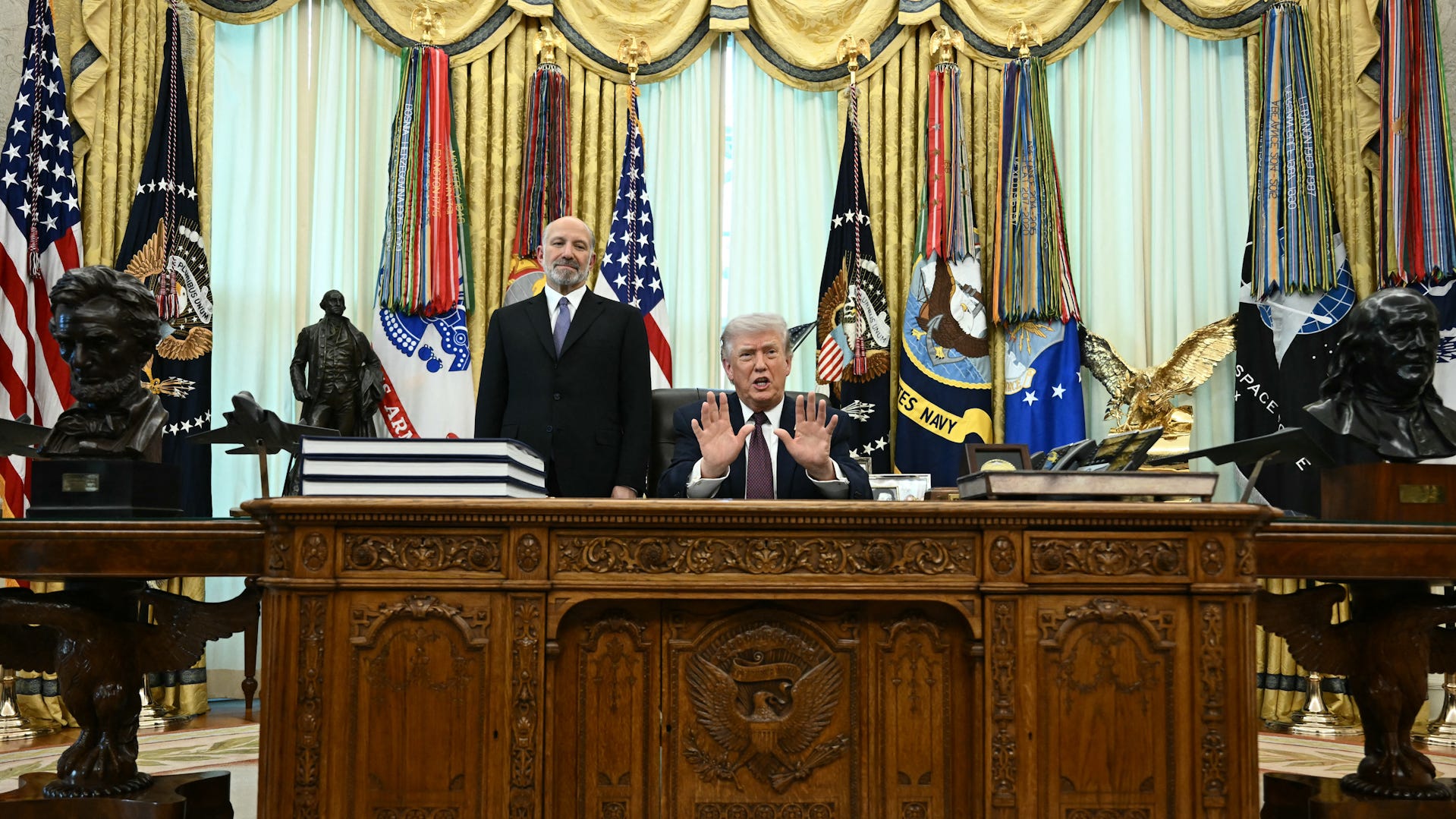
Guterres’ declaration followed a speech from Donald Trump, aiming to justify American military action. While not directly addressing the content of Trump’s speech, Guterres challenges its overall logic. His message is clear: explaining the offensive does not make it politically or strategically sustainable, especially if it leads to regional escalation.
This clarification is significant, emphasizing that the UN refuses to engage in a narrow debate solely focused on justifying military strikes. The broader question at play is the sequence’s outcome. If the conflict leads to its expansion, multiple fronts, and increased global instability, then the logic behind military action becomes the problem.
The Middle East on the Verge of a Conflict Transformation
The UN’s concern lies in the potential transformation of the conflict’s nature. While a bilateral or trilateral crisis remains negotiable within set boundaries, an open regional war involves numerous actors, interconnected interests, multiple fronts, and often conflicting objectives. Guterres aims to prevent this shift.
As operations interact rather than unfold independently, strikes on Iran influence positions in Lebanon, maritime threats impact Gulf capital calculations, and American statements reshape European NATO debates. Iranian responses are tailored to regional scales, each center becoming an extension of another. This interplay heightens overall instability.
Restoring a Language of Limits
Guterres’ statement reintroduces a fading term in the vocabulary of war: limits. Limits on strikes. Limits on retaliation. Limits especially on the risks actors are willing to take for immediate objectives. By insisting that “the spiral of death and destruction must cease,” Guterres reestablishes the idea of a threshold that still exists and can be refused.
This emphasis is crucial as the region has been navigating successive crises where every new escalation has been presented as contained, rational, or necessary. The UN signals that this pattern no longer suffices. Beyond a certain level of accumulated tensions, the argument for control loses credibility.
An Alert in a Moment of Strategic Fog
Guterres highlighted the numerous uncertainties surrounding the conflict, crucially noting the incomplete evaluation of intentions, response thresholds, and exit strategies. Uncertainty is not peripheral; it fuels the crisis itself.
In a conflict where actors lack a clear vision of adversaries’ intentions, response thresholds, and self-imposed limits, the deterrence weakens, and miscalculations become more likely. In such an environment, international organization warnings gain particular relevance, signaling that uncertainty has become a major risk.
Guterres’ statement underscores the fragility of strategic clarity. While it does not produce an immediate ceasefire or erase military actions, it accentuates a critical aspect: ongoing operations are no longer standalone events within a prolonged crisis but are approaching a threshold where everything might change dimensionally.
A Call to Reprioritize Diplomatic Language
Guterres’ warning targets not only Washington, Tel-Aviv, or Tehran but also regional capitals observing, engaging, or suffering from the crisis’s effects. His message to them is clear: are they prepared to endure a lasting conflict extension or still contain it? This query resonates across Gulf, Levant, and Eastern Mediterranean diplomatic circles.
Guterres’ alert can be seen as an attempt to reclaim diplomatic ground before military calculations dominate entirely. As fronts expand, diplomats negotiate amidst the airstrikes’ shadows. Yet, when war dictates diplomacy’s pace, room for compromise diminishes. Guterres aims to reverse this dynamic, reinstating political logic before military agendas suppress everything.
Conclusion
Guterres’ alert does not close doors but reminds that if the “drums of war” continue beating, the conflict might not evolve as actors presently believe. It highlights a critical moment where the war may no longer be under the control of those fueling it. This, more than anything, is what the Secretary-General seeks to avert.