Here is the latest economic developments globally on Thursday around 14:00 GMT, on the 41st day of the conflict in the Middle East.
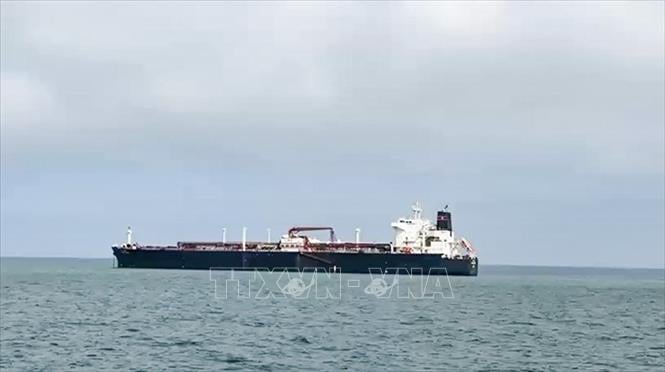
The American barrel surpasses $100, driven by concerns over the truce in Iran The price of American oil rose above $100 on Thursday due to doubts about the strength of the ceasefire between Iran and the United States and a paralyzed Strait of Hormuz.
After dropping on Wednesday to finish at $94.41, the West Texas Intermediate (WTI) barrel for May delivery bounced back by 6.41% to $100.46 around 13:55 GMT.
The Brent North Sea barrel, for June delivery, increased by 3.94% to $98.48.
Stock markets in the red, gripped by tensions “Optimism about a ceasefire faded on Thursday, as the news from Iran turned negative,” summarized Kathleen Brooks, research director at XTB.
In New York, the three Wall Street indices started Thursday’s session on a downward trend: Nasdaq (-0.17%), S&P 500 (-0.14%), and Dow Jones (-0.30%).
In Europe, there was also a decline less than two hours before the close, whether in Frankfurt (-1.40%), Paris (-0.71%), or London (-0.25%). Milan was hovering around the break-even point (-0.07%).
The French Prime Minister intends to “draw lessons” from the energy crisis Sébastien Lecornu will speak on Friday “at the end of the day from Matignon to draw conclusions from the energy crisis,” his entourage announced on Thursday without further details.
Ministers Roland Lescure (Economy), Maud Bregeon (Energy), and Serge Papin (Commerce) were scheduled to meet on Thursday at 3:00 pm with fuel distributors to quickly pass on price reductions, as oil prices rose again after a drop on Wednesday.
Several ministers also gathered on Thursday morning at Matignon to work on the future electrification plan, which would make France less dependent on imported hydrocarbons. Sébastien Lecornu had asked them for a “second version” of the plan, considering that it did not go far enough.
The war in Iran could plunge 45 million people into food insecurity (IMF) The conflict in the Middle East could put around 45 million people in food insecurity, with the risk escalating further, IMF Managing Director Kristalina Georgieva warned on Thursday.
In her traditional curtain-raiser speech before the spring meetings starting on Tuesday, the head of the International Monetary Fund (IMF) added that the institution anticipated additional support requests from member countries “ranging somewhere between $20 billion and $50 billion, at the lower end if the ceasefire holds.”
Nuclear: Iran rules out any restriction on its uranium enrichment program The head of the Iranian Atomic Energy Organization on Thursday ruled out any restrictions on the uranium enrichment program, a fundamental demand of the United States and Israel.
“The claims and demands of our enemies to restrict Iran’s enrichment program are mere pretensions that will be buried,” declared Mohammad Eslami, as discussions are set to take place at the end of the week, with Pakistani mediation.
Hormuz: EU rejects the idea of a “toll,” calls for respect for freedom of navigation The European Union rejects any idea of a “toll” to pass through the Strait of Hormuz, where freedom of navigation must be maintained, one of its spokespersons stated on Thursday.
“International law enshrines freedom of navigation, which means what it means: no payment or toll of any kind,” affirmed spokesperson Anouar El Anouni.
Establishing a toll mechanism would be “unacceptable,” the French foreign minister also stated earlier in the morning.
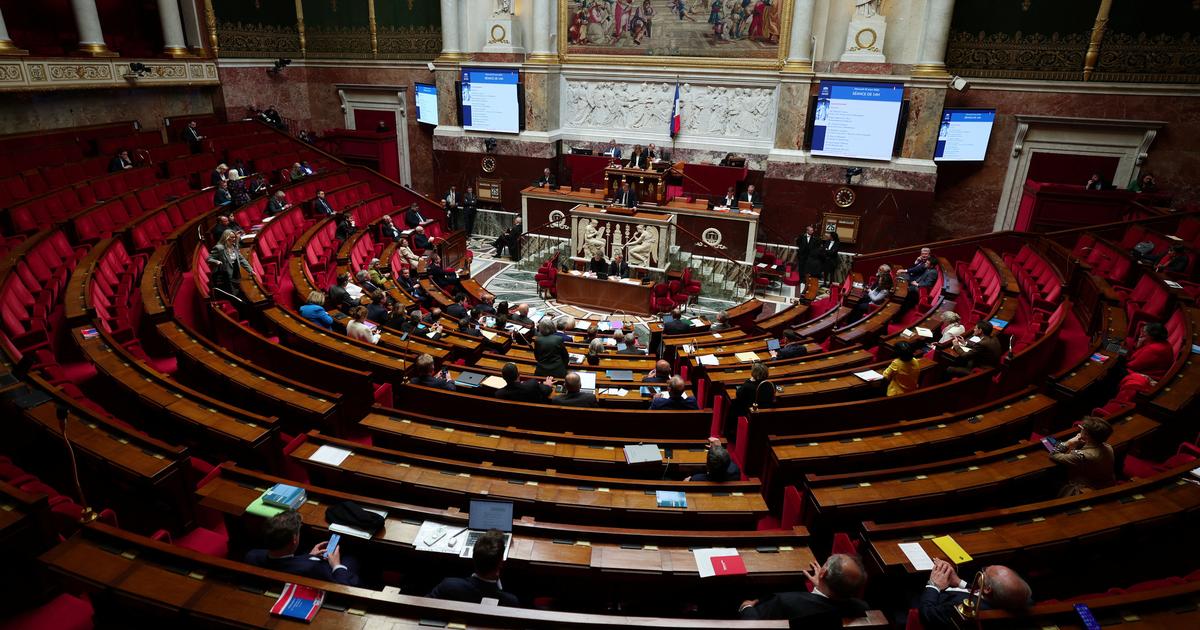
EU: Italy calls for suspension of deficit rules if the Middle East war persists Italian Prime Minister Giorgia Meloni called on Thursday for a “generalized” suspension of European rules on public deficits if the war in the Middle East continues.
“If the crisis in the Middle East were to reignite, we should seriously consider a European response that, through its approach and instruments, is not different from that put in place to respond to the Covid-19 pandemic,” Giorgia Meloni stated during a general policy speech to the Italian Parliament.