
At two times in nine months, the United States and Iran have been on the verge of concluding a real agreement on their most divisive issue: the Iranian nuclear program and American fears that it could be a weapons program. It was therefore a shock, but not a surprise, when on February 28, just hours after the latest, most substantial negotiations, Israel and the United States again launched an illegal military strike against the brief peace that had briefly seemed truly possible.
The retaliatory strike by Iran against what it presents as American targets located on the territory of its neighbors was an inevitable outcome, although deeply regrettable and completely unacceptable. Faced with what Israel and the United States described as a war to end the Islamic Republic, it was probably the only rational option available to Iranian leaders.
The effects of these retaliations are felt most acutely in the southern part of the Gulf, where Arab countries that had placed their trust in American security cooperation now see that cooperation as a serious vulnerability, threatening their current security and future prosperity.
The Gulf states, which were banking on an economic model involving sports, tourism, aviation, and technology on a global scale, now see this model under threat. The repercussions of Iran’s retaliatory measures are already being felt globally, with maritime traffic in the Strait of Hormuz severely disrupted, leading to rising energy prices and the threat of a deep recession. If the instigators of this war did not anticipate this, it is undoubtedly a serious miscalculation.
The biggest mistake of U.S. administration analysis has indeed been to allow itself to be drawn into this war. This is not the United States’ war, and there is no plausible scenario in which Israel and the United States could both achieve what they want. It is hoped that the U.S. commitment to regime change remains purely rhetorical, while Israel openly seeks to overthrow the Islamic Republic and likely cares little about how the country will be governed, or by whom, once this goal is achieved.
In this regard, Israeli leaders seem to have convinced the United States that Iran was so weakened by sanctions, internal divisions, and American-Israeli strikes on its nuclear sites last June, that an unconditional surrender would quickly follow the initial assault and the assassination of the Supreme Leader. But it should now be clear that for Israel to achieve its declared goal, a long military campaign will be needed that would require the United States to commit ground troops, opening a new front in these endless wars that President Donald Trump had previously pledged to end. This is not what the U.S. government wants, nor does the American population, who certainly do not see this as their war.
The question facing America’s friends is simple. What can we do to extricate the United States from this intractable situation? First and foremost, America’s friends have a duty to tell the truth. It begins with the fact that there are two parties in this war who have nothing to gain, and that the national interests of both Iran and America lie in a swift end to hostilities. This is a difficult truth to tell as it involves showing how much America has lost control of its own foreign policy. But it must be said.
American leaders must then determine where their national interests truly lie and act accordingly. A clear assessment of these interests would likely lead to a definitive and decisive end to the proliferation of nuclear weapons in the region, ensuring the security of energy supply chains, and creating new investment opportunities given the region’s growing economic importance on the world stage. Peace between Iran and its neighbors is the best way to achieve all these objectives. These could undoubtedly be seen as common goals for all Gulf countries. The challenge is to find the path to escape the current catastrophe to achieve them.
It may be difficult for the United States to return to bilateral negotiations they have been distracted from twice by the sirens of war. It will certainly be challenging for Iranian leaders to resume dialogue with an administration that has abruptly shifted from talks to bombings and assassinations twice. But the path to avoid war, as difficult as it may be for both parties to follow, may precisely be through this resumption of talks.
Consider the positive energy
The parties need an incentive to find the courage necessary to resume dialogue. This could be done by placing the necessary bilateral negotiations to resolve the central dispute between the United States and Iran in a broader regional process aimed at establishing a framework of transparency on nuclear energy and, more generally, energy transition in the region. As all the region’s countries turn towards a shared post-carbon future, innovation and development can only be done safely if a minimum agreement is reached on the role nuclear technologies will play.
Could this perspective be an attractive enough stake for all major actors to fully accept the difficulties of dialogue in order to win together? This is certainly a track that Oman and its Gulf Cooperation Council neighbors could propose. Preliminary discussions could eventually lead to measures aimed at restoring confidence and reaching a consensus on the role that nuclear energy should play in the energy transition. It is of course impossible to determine the final outcome of such a process, especially in the midst of war. But could it be possible, perhaps within the framework of a regional non-aggression treaty, to conclude a substantial regional agreement on nuclear transparency?
Badr Albusaidi is the Minister of Foreign Affairs of Oman. He played the role of mediator in the recent nuclear negotiations between the United States and Iran.

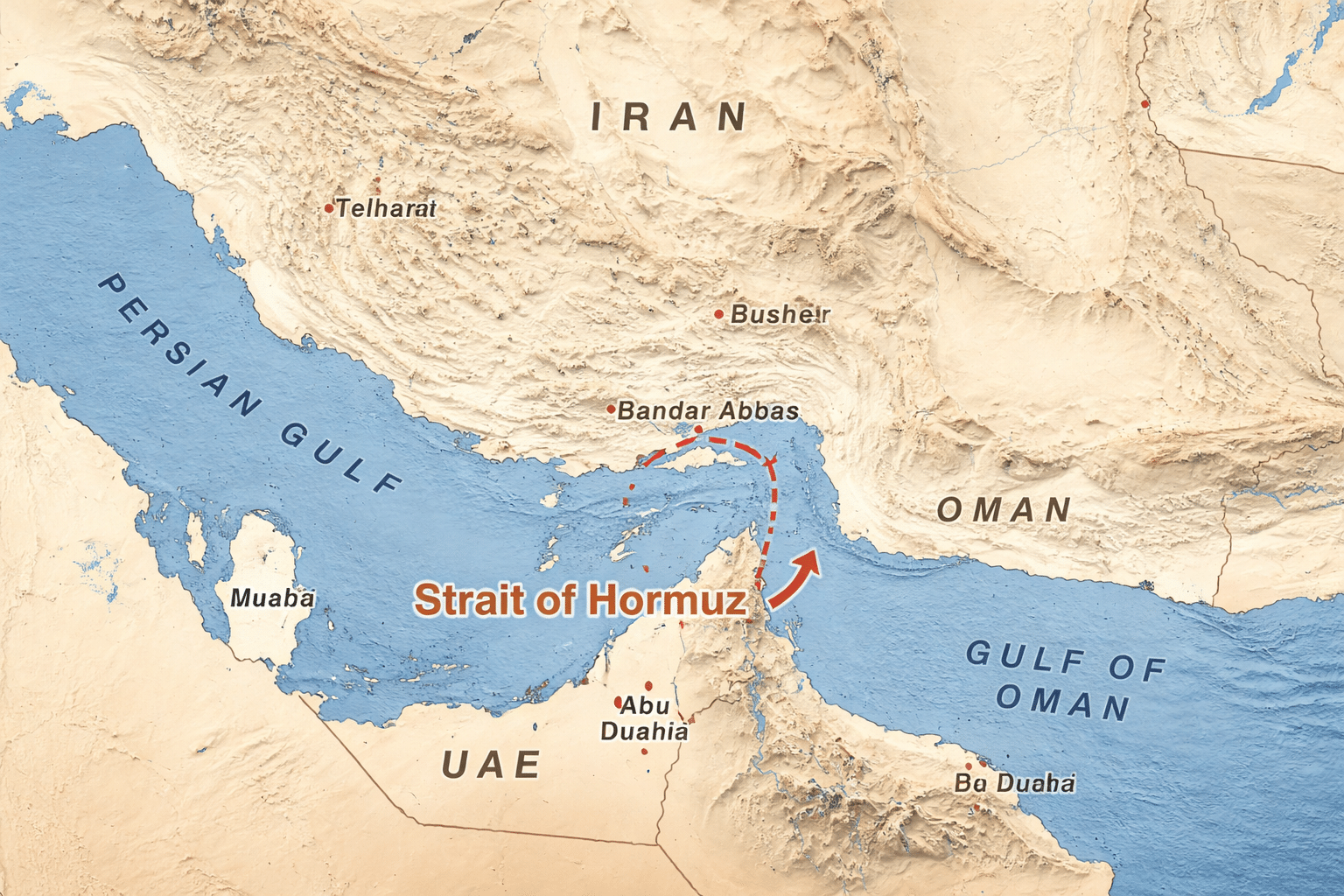




/2026/04/12/69dbc16ac0da3256568984.jpg "Blockade announced by Donald Trump, possible toll imposed by Iran, threat of mines… What is the situation")
/2026/04/12/69dbe029a07ed085047232.jpg "Paris")
