
Africa is faced with an alarming increase in non-communicable diseases and associated mortality. According to Statistics South Africa, deaths from non-communicable diseases such as type 2 diabetes and hypertension have increased by over 58% between 1997 and 2018.
The crisis of overweight and obesity in the country exacerbates the risks associated with these diseases. Over 40% of the adult population is overweight. Despite the potential benefits of physical activity in preventing and managing many non-communicable diseases, 47% of adults do not engage in any physical activity. Many struggle to meet the World Health Organization’s recommendations of 150 to 300 minutes of moderate-intensity aerobic physical activity per week.
Research has shown that even brief and low-intensity movements can have measurable benefits for physical and mental health. Daily tasks also count. New data indicates that short bouts of physical activity lasting less than five minutes can have positive effects on health.
As exercise science and sports medicine researchers, we have observed particularly low levels of physical activity in South Africa. Only 19.8% of adults meet the WHO recommendations, compared to a global average of 73%.
A study on 62 office workers at the University of the Witwatersrand also showed the short-term impact on health of adjustable sit-stand desks. Our intervention reduced sitting time and slightly improved indicators such as body mass index and blood pressure. Given the high burden of obesity and sedentary lifestyles among office workers in South Africa, these improvements are encouraging and support the global health message that even a modest increase in daily physical activity can have a positive influence on health.
These results were the basis for the “Mzansi, what’s your move?” campaign led by the university. The campaign aims to encourage staff and students to move more by demonstrating how simple gestures can cumulatively constitute physical activity. It includes a series of comic strips and murals on campuses.
Here are some actions highlighted in our campaign to encourage everyone to move more. These are everyday tasks that may seem mundane but count as physical activity, reflecting people’s reality.
Household Chores
Many people do not consider household chores as a form of physical activity. However, tasks like sweeping, mopping, or vacuuming require sustained movements and engage multiple muscle groups.
Scrubbing floors, washing windows, and cleaning bathrooms involve movements like squatting and stretching. Gardening can also strengthen muscles.
In our campaign, we created comic strips highlighting movements that can be done at home and within the community. We emphasize how all family members can move in a way that suits their lifestyle and physical abilities.
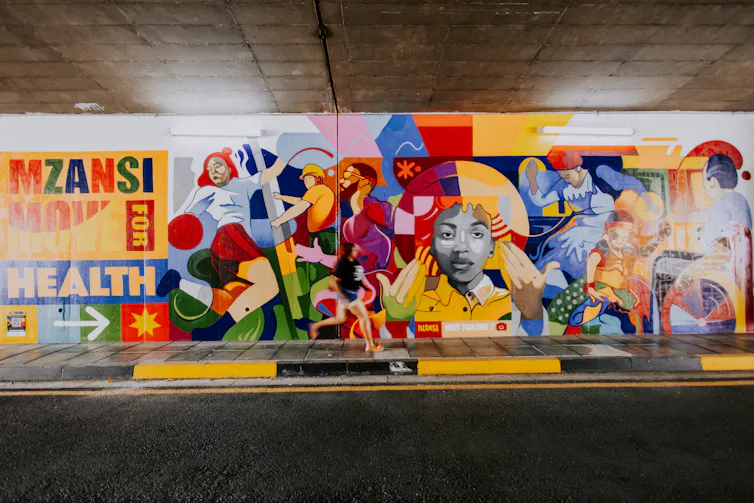
Caption: A mural on the Wits campus as part of the “Mzansi, What’s your move?” campaign promoting physical activity for health.
Active Commuting
Walking or cycling to work or school significantly contributes to daily physical activity. Studies have shown that active commuting is associated with reduced body fat, lower blood pressure, and improved mental well-being.
Incorporating physical activity into daily commutes is a practical way to accumulate physical activity without dedicating extra time. Walking briskly to the train station, cycling a few kilometers to work, or taking a longer route to drop off kids at school all add up over time. Even minor changes like getting off the bus a stop earlier or taking the stairs instead of the elevator can produce measurable health benefits over weeks and months.
However, fully capitalizing on the benefits of active commuting depends on city infrastructure. In South Africa, safety is a legitimate concern for all road users. Statistics South Africa’s 2024 report shows more pedestrians than car passengers were killed in road accidents in 2007, 2013, and 2019. Crime rates in the country are also a safety concern, making people hesitant to walk, even in their own neighborhood.
These challenges are not insurmountable. To start, forming walking or running clubs can encourage group movement.
Beyond individual actions, municipalities can impact green spaces. This includes ensuring parks are clean and safe for pedestrians. Damaged sidewalks and cycle paths should be maintained in all neighborhoods.
Incidental Movements
Incidental movements refer to short periods of activity throughout the day. Integrating these movements into daily life can provide significant health benefits, especially in office environments where many people sit for long periods. Employers can encourage their staff to use stairs instead of elevators through simple posters or painted footprints. Another way to promote physical activity is by centralizing common facilities (printers, trash cans, water fountains) so that staff covers short distances.
Microbreaks also offer opportunities for informal movements. Stretching during meetings or after long sitting periods, having discussions standing instead of sitting, and walking meetings for small groups all contribute to employees’ physical activity.
In 2024, we studied the short-term impact of physical activity interventions such as high-intensity interval training and continuous moderate-intensity training on 43 workers at the University of the Witwatersrand. The study had a small number of participants, but the results showed that our intervention reduced indicators like waist circumference, body mass index, blood sugar, and blood pressure while improving fitness.
Key Takeaways
It is not necessary to be a gym member or follow a strict training program to move. Simple daily activities together constitute significant physical activity. These “snacks of movement” make exercise accessible, manageable, and sustainable, especially for those who find structured workouts intimidating or time-consuming.