
The Path Tracing Technology: A Complete Guide
For the past few years, ray tracing has been a significant graphical innovation in PC and next-gen console gaming. However, another technology, even more ambitious and demanding, has been making waves for years: path tracing. What is it, and how does it work?
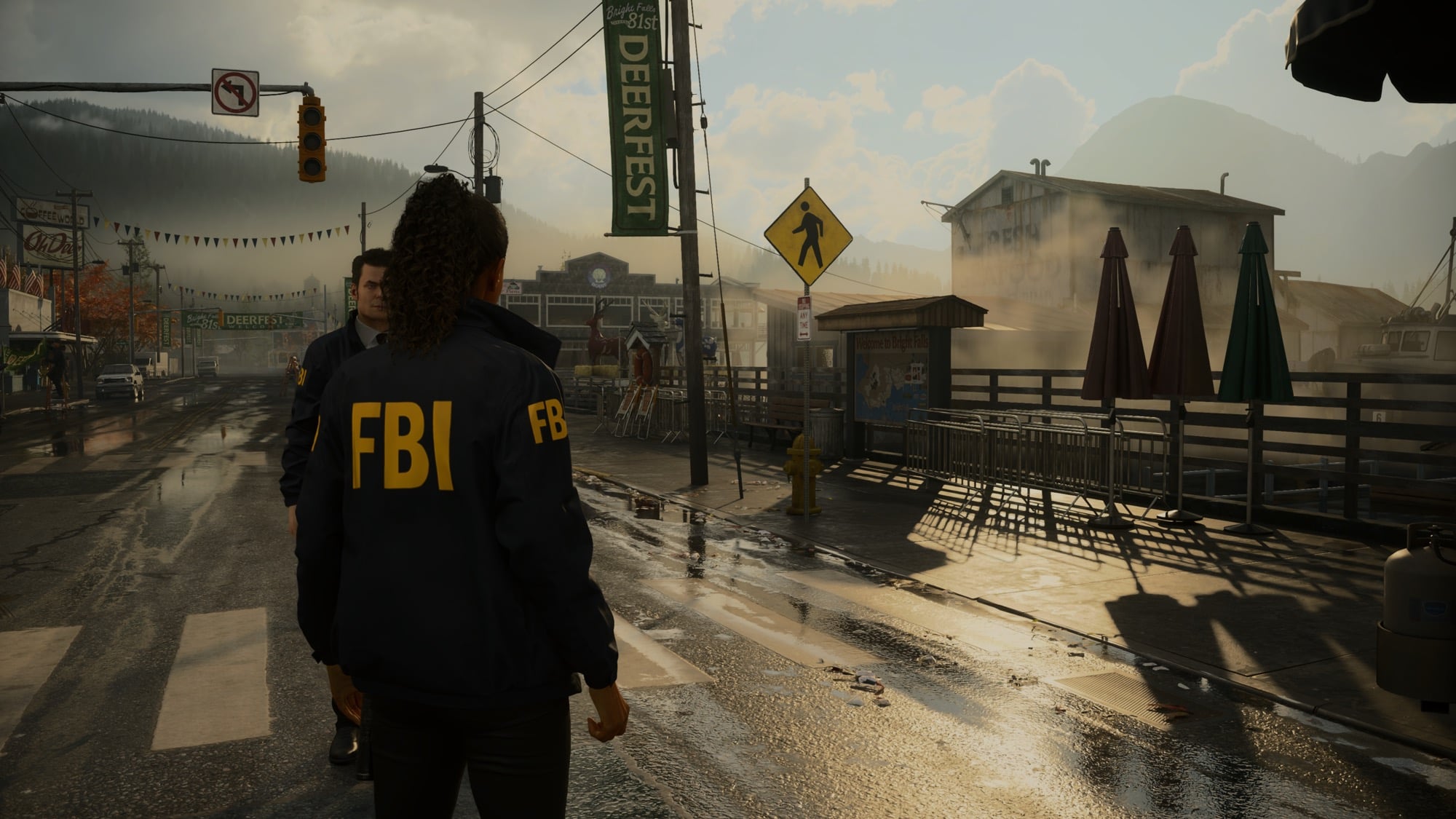
Before delving into path tracing, it’s essential to understand how video games have traditionally simulated light. For decades, most games have used “rasterization rendering”: objects are projected onto the screen as triangles, and shadows, reflections, and lighting are simulated through various tricks. The result is already performant but often lacks accuracy in terms of lighting.
Ray tracing, on the other hand, has changed the rendering logic. Light rays are computed from the camera and interact with the scene’s objects. This allows for more believable reflections, shadows, and indirect lighting. However, in current games, ray tracing remains hybrid, with only certain effects calculated using this method while the rest of the image still relies on rasterization rendering.

So what makes path tracing superior? Often hailed as the holy grail of real-time rendering, it promises nearly photorealistic illumination at the expense of complex technical requirements. What exactly is path tracing, and more importantly, how does it impact gameplay?
Read also:
In 2026, a significant leap in ray tracing for Linux gaming
What is Path Tracing?
Path tracing is a much more radical evolution of ray tracing. Unlike hybrid ray tracing, all the scene’s lighting is calculated using rays. Each ray can bounce multiple times, carry color, lose energy, and interact with various materials. Indirect lighting, diffuse reflections, and surface coloration are all considered.

Put simply, path tracing is not just a graphical effect but a complete rendering model. While widely used in animation and professional 3D rendering, the difference lies in the real-time nature of gaming. Everything must be displayed in real-time.
Why is it Resource-Intensive?
The challenge with path tracing lies in its significantly higher resource demands compared to ray tracing due to the extremely complex light simulation. Each pixel may require dozens or even hundreds of rays with multiple bounces per ray. Additionally, advanced calculations on materials and surfaces are necessary.
Without optimization, performance can plummet. Even high-end GPUs struggle to maintain a playable framerate. As a result, path tracing heavily relies on upscaling, noise reduction (denoising), and powerful GPUs.
Read also:
Testing Gigabyte’s RTX 4070 Ti in 4K with Path Tracing: a reliable graphics card
Impact on Gameplay
The immediate effect is notably more realistic lighting. Dark areas are naturally illuminated, light bounces off colored walls, and indoor-outdoor transitions become more believable. Lighting inconsistencies are nearly eliminated.
Furthermore, reflections gain fidelity. Reflective surfaces display their surroundings entirely, even off-screen. Rough materials react more naturally, with angle and distance-dependent reflections.

Overall, the atmosphere becomes more cinematic. Path tracing enhances volume perception, contrast, and visual depth. Some games truly feel like interactive movies.
Examples include Cyberpunk 2077 with its Overdrive mode featuring full path tracing, transforming Night City drastically. Alan Wake 2 utilizes advanced global illumination rendering, contributing significantly to the game’s visual identity. Even Minecraft benefits from path tracing, altering the visual experience and emphasizing light’s central role in gameplay and ambiance.
Hardware Requirements
The graphics card is crucial for path tracing, relying on massive light ray calculations with multiple bounces per pixel. Currently, only Nvidia’s RTX GPUs have a mature ecosystem for gaming path tracing. RTX 4070 and higher models make path tracing playable, with better performance on RTX 4080 or 4090.

While AMD Radeon and Intel Arc GPUs support hardware ray tracing, they still lack full path tracing capability for real gaming conditions due to DLSS equivalents and inferior ray tracing performance. Path tracing also demands significant video memory for complex scenes, requiring at least 12GB VRAM for optimal conditions, with 16GB or 24GB recommended for higher resolutions.
Contrary to expectations, the processor plays a secondary role in path tracing, with most calculations processed on the GPU. However, a weak CPU can bottleneck performance in open-world or script-rich games. A modern 6 or 8-core CPU like Ryzen 5 or Core i5 is typically sufficient, offering better stability but not directly enhancing path tracing performance.
Read also:
How RTX 50 series and Path Tracing are changing the gaming industry