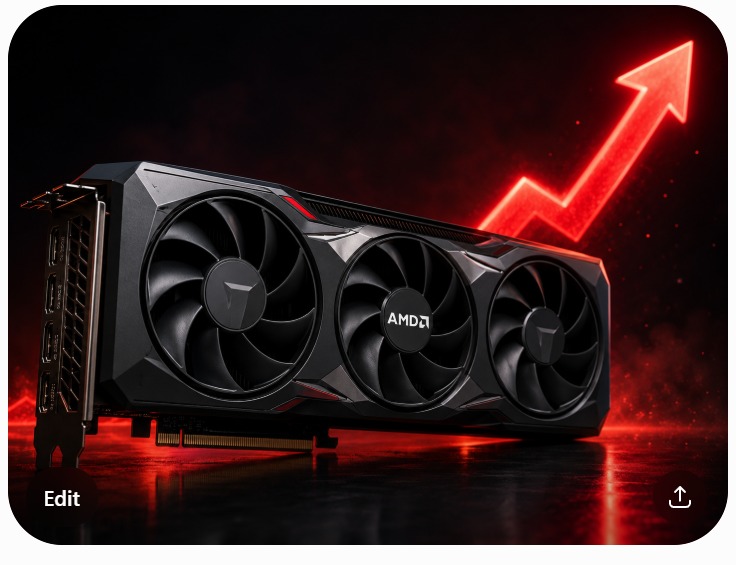
After graphics cards and memory, it is now the turn of processors to undergo new price pressure. The CPU market is entering a phase of rising prices, driven by explosive demand linked to artificial intelligence and still limited production capacities.
According to several industry sources, Intel and AMD have already initiated a first wave of increases… and are preparing a second for the coming months.

Intel and AMD CPUs: increases already visible since spring
Since March, the prices of consumer processors have increased by 5 to 10%, while CPUs intended for servers have shown even more marked increases, of between 10 and 20%.
A trend which is not anecdotal, since it is part of a global dynamic of tension across the entire semiconductor market. But the most worrying thing is yet to come: a new increase would already be anticipated for the third quarter of 2026.
Artificial intelligence captures all resources
The main explanation behind these increases is now well known: the rise of artificial intelligence. CPU requirements for servers, data centers and AI infrastructures are exploding, driving unprecedented demand.
Faced with this situation, foundries must arbitrate the allocation of their production capacities. And as is often the case, the most profitable segments, particularly professional solutions, take priority. Result: the general public market directly suffers the consequences of this strategic reorientation.

Production always under pressure
Beyond demand, the problem also comes from supply. Advanced manufacturing processes (3 nm, 2 nm and soon 1.8 nm) remain limited in capacity, even though they are used by a multitude of products: CPUs, GPUs, AI accelerators, ASICs and other specialized chips.
This increased competition for access to the same production lines creates a bottleneck which prevents any stabilization of prices.
TSMC, the main player in the sector, continues to increase its capacities, including on already mature nodes such as 3 nm, a sign that the pressure remains extremely strong.

Intel and AMD launch a second wave
Intel has already made several price adjustments in the spring, particularly on its desktop and server CPUs. These increases would have helped to improve its margins in the second quarter.
But the company does not intend to stop there. A new increase of between 8 and 10% is planned for the second half of the year. AMD would follow a similar trajectory, with two successive increases planned for its server processors, potentially reaching a cumulative increase of 16 to 17%.
A domino effect on the entire ecosystem
This increase in CPU prices adds to a series of tensions already well established on other components: DRAM memory, NAND storage, graphics cards…
Ultimately, the entire chain could be impacted. Motherboards, power supplies and other components could also see their prices increase, particularly due to rising costs of raw materials and production.
Towards a market lastingly under pressure
The outlook for the end of 2026 and 2027 remains tense. As long as production capacities do not catch up with demand, particularly in advanced technologies, the market is expected to remain unbalanced.
For consumers, this means one thing: processors, like the rest of the hardware, are likely to become even more expensive in the months to come.
In a context where artificial intelligence is redefining industry priorities, PC gaming and the general public seem once again relegated to the background.