In 2025, the Eastern Route — linking the Horn of Africa to the Gulf countries via Djibouti and Yemen — has been labeled “the deadliest year ever recorded” by the IOM, with over 900 migrants dead or missing. Between 200 and 300 people arrive in Obock every day, mostly fleeing armed conflicts that are devastating Ethiopia.
Testimonies from Obock reveal extreme conditions: smugglers cramming 320 people onto a small boat, migrants being beaten with sticks, women abandoned in the desert in 45°C heat, and mass graves holding over 200 bodies near the Djiboutian coastline.
With the increasing flow, the IOM warns that each year is “deadlier than the previous,” and resources are lacking to address the humanitarian crisis largely ignored by Western media in favor of other migration routes.
By Dylan Gamba — Reporting from Obock, Djibouti
On a vast sandy plain in Djibouti, scorched by the sun, groups of men walk towards a distant home after failing to reach Yemen via the Eastern Route connecting the Horn of Africa and the Arabian Peninsula, one of the most dangerous migration routes in the world.
Their features are drawn, their bodies emaciated. Some say they haven’t eaten for days. Only a few acacia trees provide some shade. In April, it is “winter” for the Djiboutians, with temperatures reaching 35°C.
Like the vast majority of migrants taking this route, Jemal Ibrahim Hassan comes from neighboring Ethiopia, the second most populous country on the continent with around 130 million inhabitants, plagued by multiple armed conflicts. He left his village in the Amhara region due to the war between rebels and federal forces.
“We had no place for peace,” emphasizes the 25-year-old, who used to work as a farmer before leaving his northern Ethiopian village for Djibouti. A journey of about 550 km on foot, equivalent to a 15-day walk. “Our feet were swollen and covered in blisters,” he recalls.
One evening, he boards an overloaded boat heading for Yemen. Several hours later, they are intercepted by Yemeni coastguards and taken to a detention center. “There was no food, nothing. We stayed there for eight days before they sent us back to Djibouti,” he recounts. On the return journey, a storm hits. “Without Allah’s will, the boat would have capsized,” says Jemal, who now walks about fifty km north of the Djiboutian coastal town of Obock, heading back to Ethiopia.
“Cramped Conditions”
Despite the risks, on land and at sea, tens of thousands of migrants from the Horn of Africa attempt to take the Eastern Route each year to reach the oil-rich Gulf states, fleeing conflicts and lack of prospects. Most try to make the crossing from Djibouti, which is about thirty kilometers from Yemen at the closest points. According to the IOM, between 200 and 300 migrants arrive in Obock daily.
This route is one of the deadliest in the world. In 2025, over 900 migrants perished or went missing, making it “the deadliest year ever recorded,” according to the International Organization for Migration (IOM).
In late March, the latest shipwreck near Obock claimed the lives of at least nine migrants, with 45 missing.
Zinab Gebrekristos, a 20-year-old from Tigray, the unstable region in northern Ethiopia, was aboard the capsized boat. She had paid a smuggler 50,000 birr (around 270 euros), a significant sum in a country where 40% of the population lives below the poverty line. During the journey, she was robbed of her money and phone before spending three days on the Djiboutian coast, “without food or water, just the desert.”
“On the evening of March 24, smugglers crammed 320 people onto a small boat. Soon, the boat started to sink,” recalls Zinab, “many people died before our eyes, friends and family members.” “I don’t even know how I managed to get out of the boat,” she says from an OIM reception center in Obock.
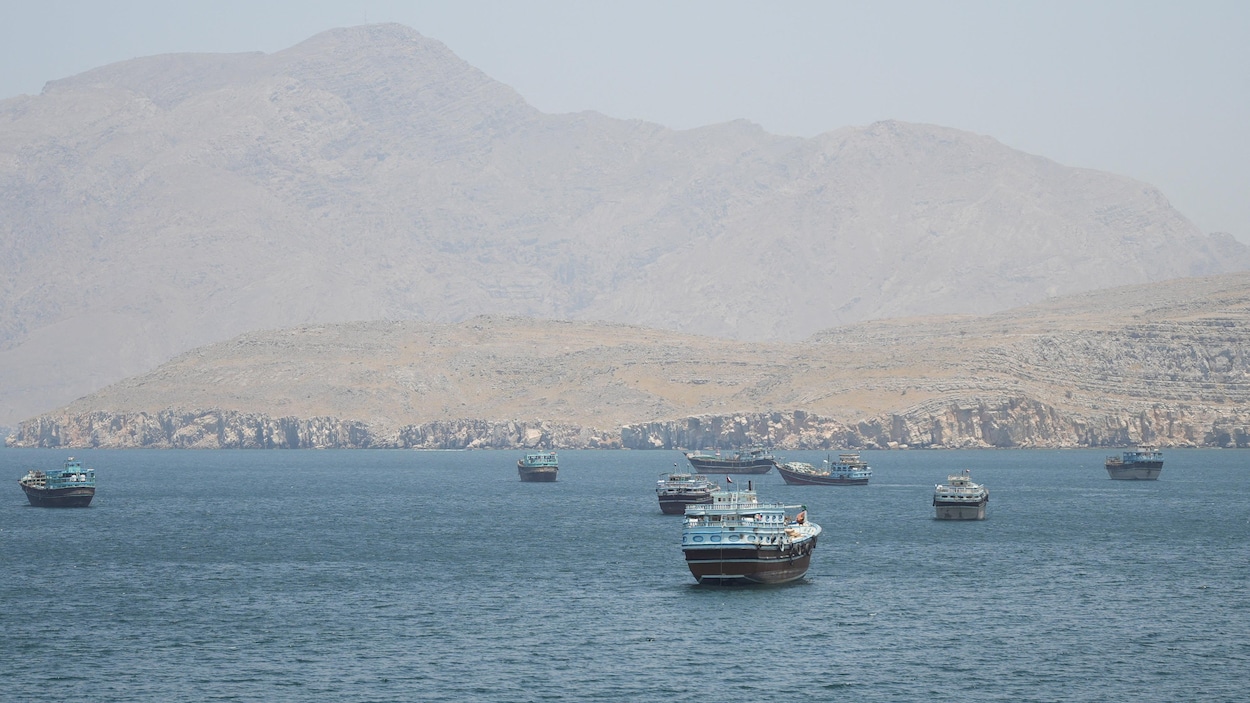
The UN organization regularly patrols the desert to assist migrants. From the Khor Angar post, Djiboutian coastguards carry out interventions to try to stop smugglers, mostly Yemenis. Dozens of seized boats line the post. In these small wooden vessels, the migrants are “cramped,” says Isma’il Hassan Dirieh, the post’s commander. “There are two tiers, some go below, others go above,” he describes, depicting a “very difficult” journey for the migrants.
After crossing the war-torn Yemen, tens of thousands of people annually head to the Gulf states, notably Saudi Arabia, where they work as laborers or domestic workers.
“Mass Graves”
About fifty kilometers north of Obock, Gehere Beach is one of the starting points. Clothes, flip-flops, and migrant shoes litter the fine sand. A cairn is erected. “We are facing two mass graves,” explains Dr. Youssouf Moussa Mohamed, 38, the head of the IOM in Obock.
“Not far away, there are still two mass graves with five bodies. Behind that mountain, there is a mass grave with 50 bodies. Another mass grave holds 43 bodies… that’s over 200 bodies buried around here,” he lists.
According to Dr. Youssouf, 98% of the migrants he meets are Ethiopians.
Coming from a landlocked country, most have never seen the sea before attempting the crossing. Between June and August, temperatures in Djibouti soar to 45°C, and violent sandstorms blind the migrants and lead them off course. Many get lost in the desert.
“We found about twenty bodies per month during this hot season last year,” points out Dr. Youssouf. Those who were not killed by the sea or the desert sometimes end their own lives, like the migrant who hanged himself last year, “out of despair.” In the Obock cemetery, where migrants who died at sea or on the road have been buried for several years, dozens of earth mounds are lined up.
“Abandoned in the Desert”
Hailing from Tigray, Genet Gebremeskel Gebremariam, 30, struggled to support her four children and mother with the 200 to 300 birr (1 to 2 euros) she earned daily as a farmworker. Convinced by a smuggler, she left the regional capital Mekelle on the back of a truck, squeezed with over 160 people. Upon arrival in the neighboring Afar region, they continued on foot, “crossing the desert and climbing cliffs all night.”
“No one helps those who are tired or fall behind; they are left behind. We were forced to walk like soldiers while being beaten with sticks on the back. Many women, weakened by thirst and hunger, were abandoned in the desert,” recounts Genet, who is waiting at an IOM center to return to Ethiopia.
On his part, Muiaz Abaroge still hopes to reach Saudi Arabia, despite the risks. “It’s scary, but I have no other choice,” emphasizes the 19-year-old from western Ethiopia, walking with two others on the road linking the Djiboutian towns of Tadjourah and Obock. “I know many people have perished, but I have to overcome this challenge.”
Faced with the increasing flow of migrants, “resources are lacking,” notes Dr. Youssouf, who fears that 2026 could be another record year: “each year is deadlier than the previous. And we don’t know exactly how long this will continue.”