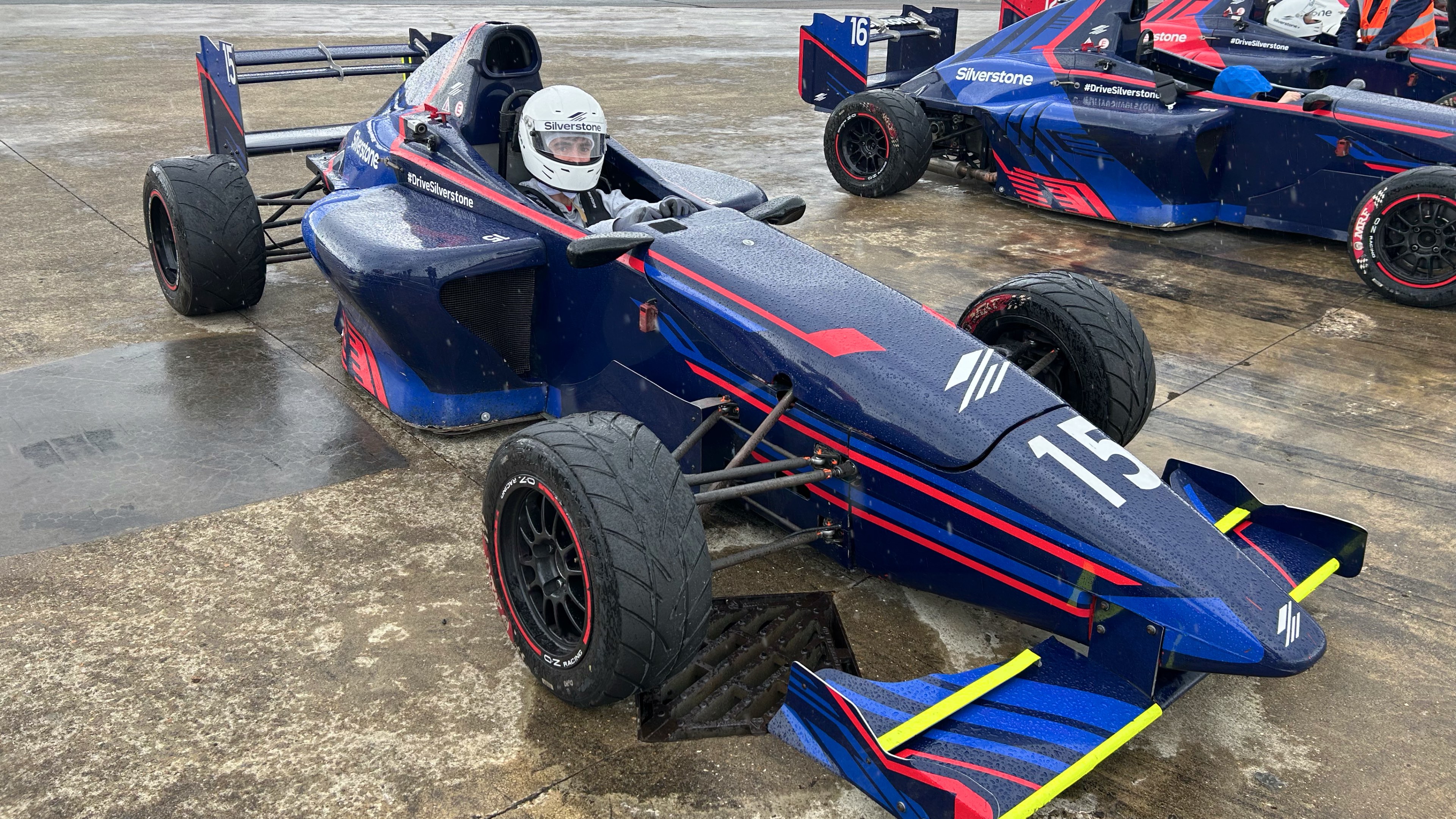
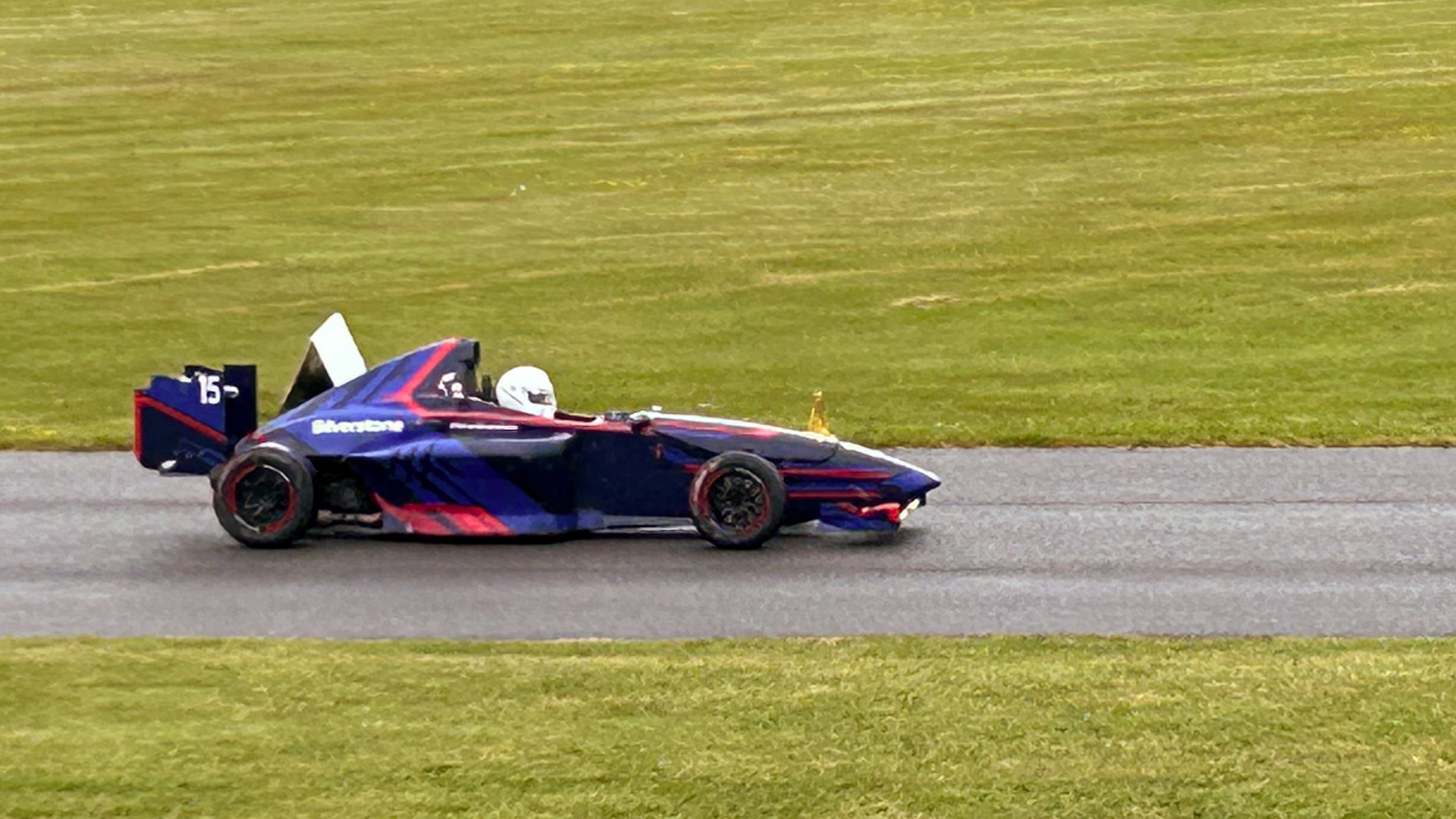
So there I was — Silverstone. The track that created so many moments for me as a spectator and a sim racer, but now I’m in my single-seater racer and ready to drive my first ever laps in real-life. The drizzle darkening the tarmac with a rather scary-looking slickness, the smell of fuel, and the coarse texture of the steering wheel fabric all fueling the adrenaline.
This is a huge contrast to my six years of confidence driving the best sim racers out there, as I immediately realized that a real formula car does not care about your virtual safety rating. But much like a lot of my friends who make the jump from the virtual to physical world, I went in with the world of confidence.
“If I’ve mastered this in sim, I should be fine here,†I told my Dad. “It’s a realistic simulation after all.†Not true. Not true at all. Don’t get me wrong: there are some lessons you learn in sim racing that you take with you, but taking to the real track is on a different level.

It’s a life-changing experience — a scary one but also some of the most heart-pounding fun I’ve ever had. So to help you make the most of a track day, here are the three harsh reality checks I faced in those 15 pulse-heightening laps, to help you prepare.
Lesson 1: The seat-of-your-pants G-Force
In sim racing, you rely almost entirely on visual cues (like the tilt of the horizon) and force feedback in your hands to figure out the control of your car. How you interpret them and perform at your best differs from person to person. This combination allows you to help identify key details like when your car’s about to oversteer, or make sure you’re applying a nice gradual acceleration out of corners rather than spinning yourself out.
As for a real-world car, good luck doing any of that as the 150-horsepower engine rattles your eyeballs, and the rumble of the engine in this 500-kg car becomes the mother of all distractions.
Instead, it’s a lot more about feel, and you have to trust the seat-of-your-pants sensation … sounds weird, I know. But let me explain. I headed into a chicane I could normally take at 120 MPH, but this time around, I lost the back and took out some cones in the process (and got told off by the pit wall).
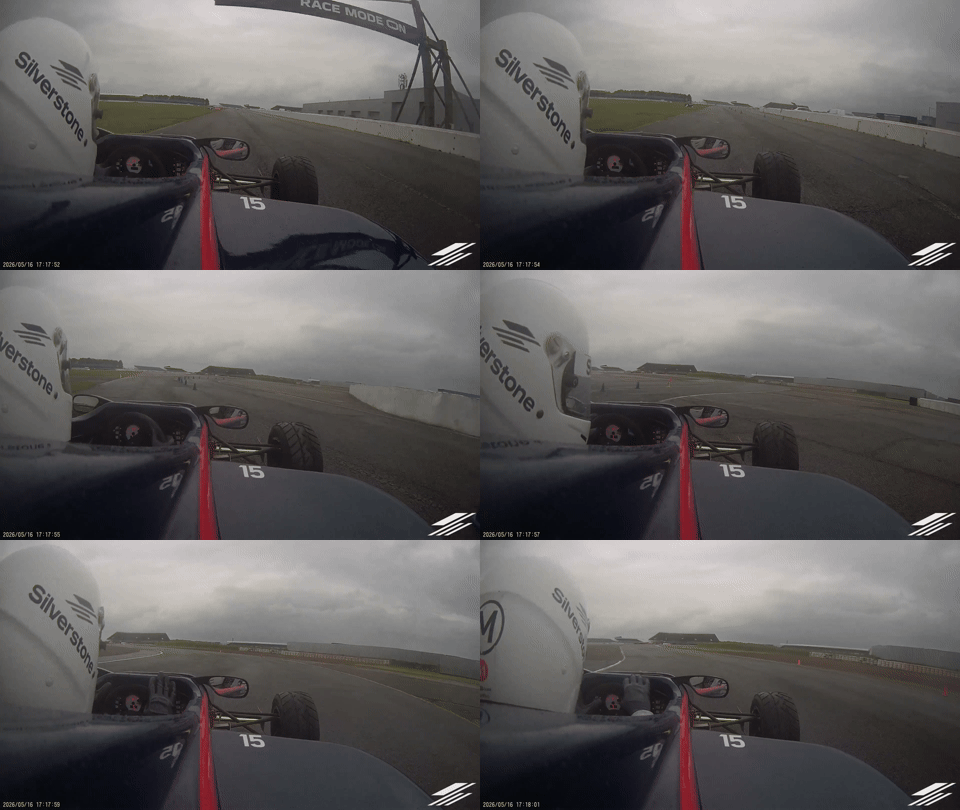
That’s when the session leader told me to feel for the back end stepping out in your inner ear and your lower back (the seat of your pants…get it?). Since that lap 5 incident, I was able to accurately predict and catch slides a lot more aggressively — especially on so inconsistent terrain like this.
Oh, and about that — rain effects in sim titles are great and all, but they never account for the inconsistency that may approach tracks. I don’t mean on a track-wide basis (Gran Turismo 7 does good at showing rain clouds pass and affect only certain sections of the track realistically), but I mean on a much more granular level.
Speaking of, though…
Lesson 2: The terror and reality of a damp track
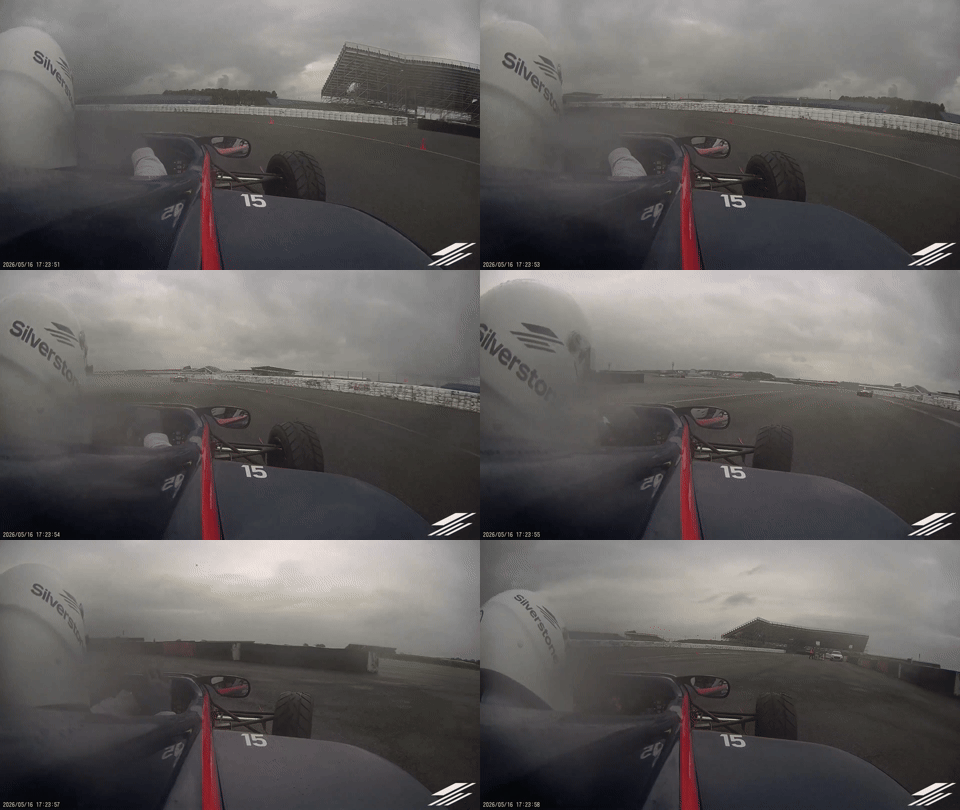
In a sim, “damp†usually just means a track-wide reduction in grip, and you adjust braking markers accordingly — usually pushing that pedal 10% earlier into corners and just looking for the pre-programmed dry line that appears.
Move over to the real-world, I found out the hard way that moist circuits are whole micro-climates. While the chicane had grip, the hairpin felt completely different and sent me spinning. This is where I learned the most important new lesson of racing: finding the line and finding your line.
Most of the time (as more of a hobbyist than a pro), I start with the guideline to help indicate the line through corners, and then turn it off/experiment with later braking points than the game suggests. Now, I’m definitely going to learn to race without this from the word “go,” because you realize just how much that takes you out of figuring things out for yourself. So if you are taking to the track IRL at any point, start practicing without the race line overlay.
Lesson 3: Brake pressure, pedal texture and my H-shifter hate
I’ve tested some of the best sim rigs on the planet, including the ridiculously great (and oh-so expensive) Asetek Forte kit. For my daily driver, I live and breathe the Nacon Revosim RS Pure in a cursed layout paired with the shifter and handbrake.
And with these chunky shifters and load-cell pedals, I believed I was getting a realistic experience. To a degree, you are, and your muscle-memory kicks in to remember the pressure. But once you apply that to a real car, you realize just how sterile these actually are.
In the real-world, the line between “slowing down†and “locking up the tires†is so thin and vibrates through your actual bones. Modulating the brakes and discovering the right line when the track conditions were actively changing lap-by-lap.
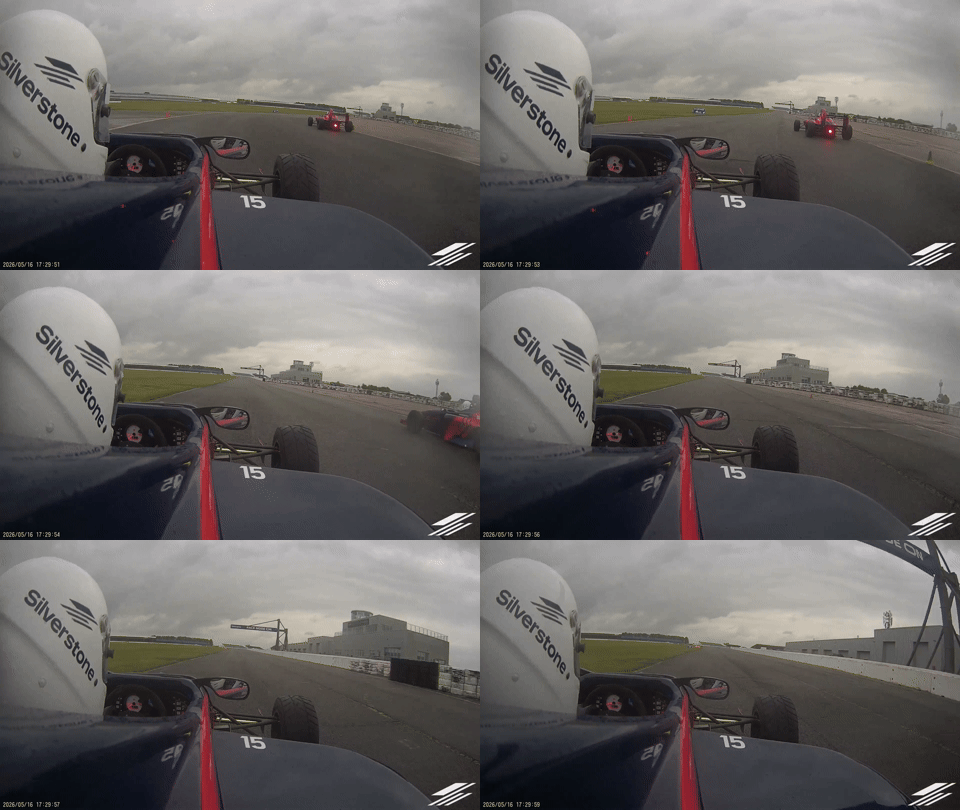
Then there’s the 4-speed shifter in the car, which…well…I absolutely hated. Turns out sim race clutch control does not prepare you in the slightest for having to tackle the same in a real race car. Throw in your own self-preservation instincts too — meaning that a spin could mean a trip to the medical center rather than just hitting “restart session,†— and it’s something that will raise your heart rate.
For this, there isn’t really any advice I can give to tweak your sim setup to prepare for the real track. Pedals and shifters don’t have the in-car inertia built into them or reactive force feedback, so this will always leave you at a bit of a disadvantage. All I can say is simply take your time at first and lean from the above points — learn the track and feel the sensations of the car to help you dictate your proper braking pressures and shifting moments.
My newfound respect for the machine
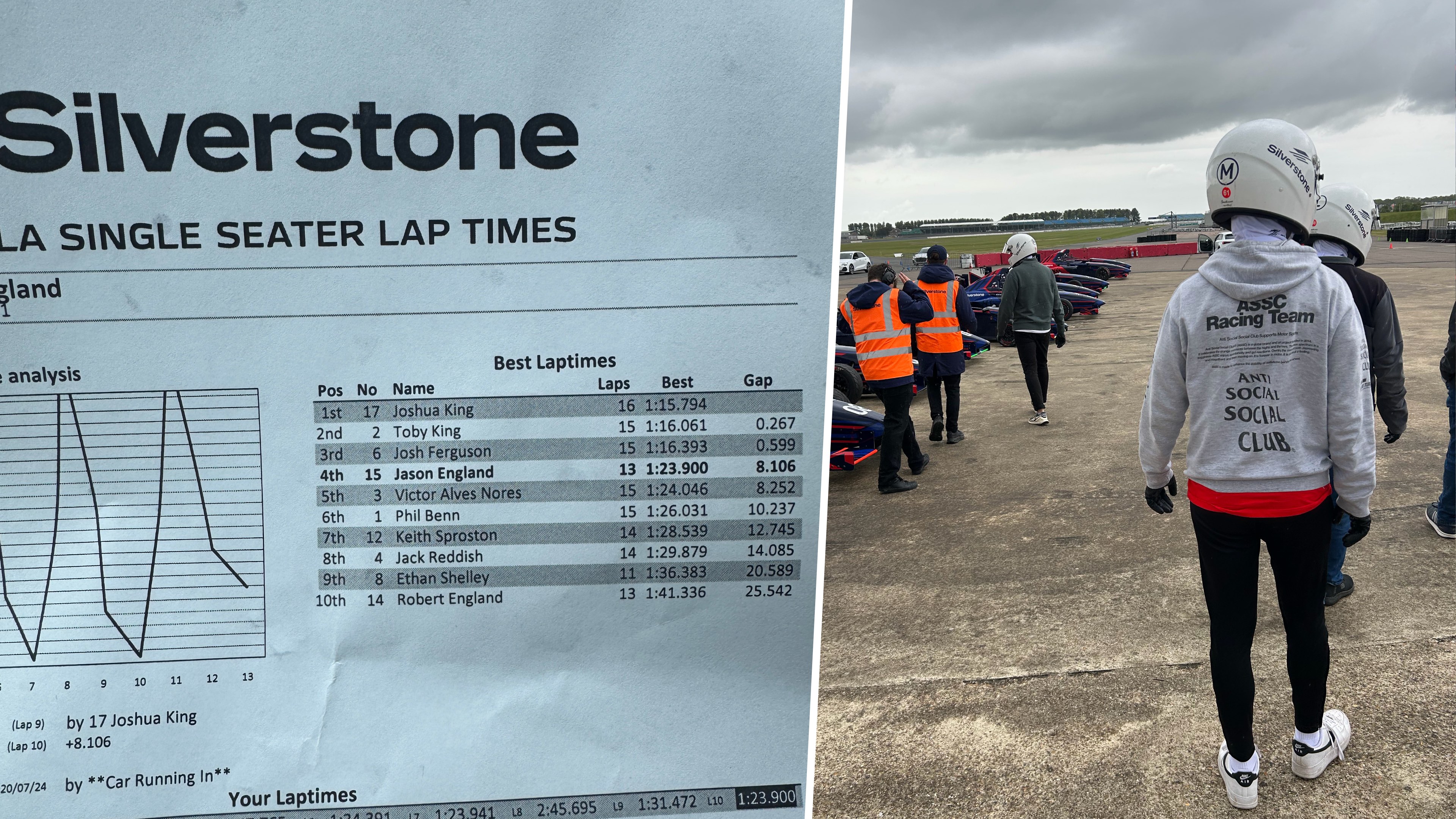
Then I got my times, and it’s a “best of the rest†situation in a solid 4th position — beating out P5 by a fraction of the second and surviving the spins. Turns out that while those hours in the likes of Assetto Corsa and iRacing did teach me track layout and the basic physics geometry of driving fast, it can never simulate the psychological weight of self-preservation.
You do learn a lot of car control techniques going from sim to real-life — honestly these incidents could’ve been a lot worse if it wasn’t for the many moments of locking brakes I’d done over my years behind the virtual wheel.
But ultimately, that leap between the bucket seat in my living room and the seat of a real race car is much bigger than I ever anticipated, and it gives me a whole different level of appreciation for the art of racing that I’ll be chasing evermore in the virtual space.
Shout-out to my Dad by the way for completing his laps safely while the rest of us ended up spinning at some points. He may have been the slowest, but this does teach you that sometimes, respect for the track is the biggest victory of all.

Follow Tom’s Guide on Google News and add us as a preferred source to get our up-to-date news, analysis, and reviews in your feeds. Alternatively, you can read our content on the Tom’s Guide app available now for iOS and Android. Subscribe to Tom’s Guide on YouTube and follow us on TikTok. Finally, you can visit our dedicated Tom’s Guide Savings Squad hub for expert help on getting the best products for less.