
Plants are growing higher up mountains across the Himalayan region, new research shows.
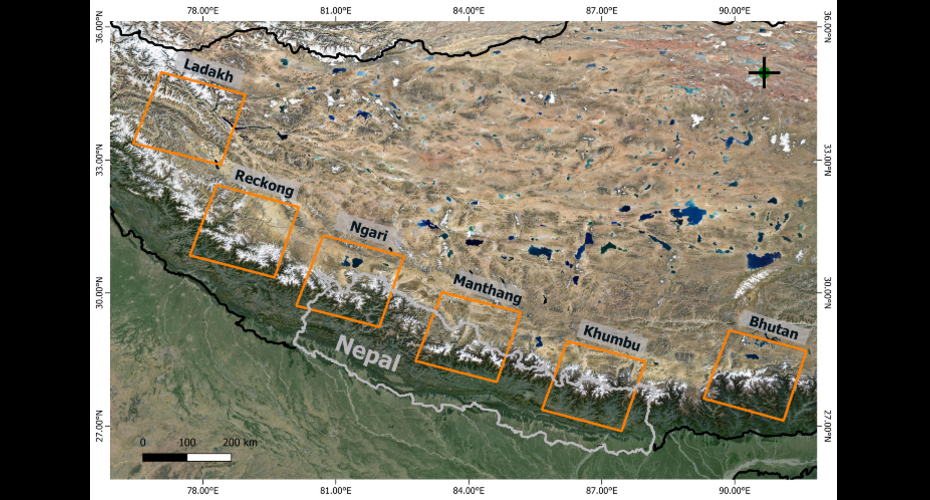
The study – led by the University of Exeter – examined the alpine “vegetation line†(the upper limit of continuous plants) in six regions across the Himalaya, from Ladakh, India in the far west of the mountain range, to the extreme east in Bhutan.
From 1999 to 2022, the vegetation line shifted upwards in all six regions – ranging from 1.42 metres per year in Khumbu (home of Mount Everest) to 6.95 metres per year in Manthang, Nepal.
With the climate warming, the team highlighted reduced snow depth as a key potential explanatory driver of these changes.
“The alpine zone is a harsh environment dominated by smaller plants and woody shrubs,†said lead author Ruolin Leng, from Exeter’s Department of Earth and Environmental Sciences.
“But as the climate changes, conditions in the Himalaya are changing in various ways – from temperature shifts and changes in snow cover to the availability of water and nutrients.
“The Himalaya are warming faster than the global average. A lot of research has focused on the melting of snow and ice, and the implications of this for water supplies on which billions of humans depend.
“Less research has focussed on plants, particularly the impact of these small alpine plants living at high altitude. But plant communities can also affect the water cycle – so our findings raise important questions that must be investigated.â€
Professor Karen Anderson, from the Environment and Sustainability Institute on Exeter’s Penryn Campus in Cornwall, added: “We tend to overlook these little plants but this is a perfect example of how small-scale processes might have impacts on important catchments, feeding rivers that supply millions of people with drinking water.
“When you consider that we’re talking about a very extensive alpine ecosystem covering a massive area in the Himalaya, it has the potential to generate significant effects. For example, alpine plants may shade the soil, trap snow, change stores and flows of water, and therefore profoundly affect the water cycle.â€
The study combined satellite imagery with long-term climate data to assess vegetation, looking for both “greening†(more vegetation or more leafy vegetation) and “browning†(which could indicate less vegetation, or more woody vegetation).
Across all study regions, greening trends were more prevalent than browning, while significant browning trends were observed in the eastern regions, specifically in Khumbu and Bhutan.
Previous research by the team showed that plant life is expanding across the Himalayan region, but the new study assesses this in more detail and quantifies the upward trend.
The study – by a team including scientists from Nepal and Switzerland – was funded by a co-scholarship within the Chinese Scholarship Council (CSC) and the University of Exeter.
The paper, published in the journal Ecographyis entitled Vegetation on the move: elevational shifts and greening dynamics across the Himalayan alpine zone.