As humanity’s final frontier, the endless mystery of space makes it the perfect setting for indie studio Soft Rains’ debut game, Ambrosia Sky. Act One’s setting in a fungus-choked space colony is ripe for exploration, but the story’s meditations on death, memory, and homecoming – seen through the eyes of its lesbian protagonist Dalia – are what make the story deeply human. Its centering of queer stories earned it not only a nomination for Outstanding Video Game at the GLAAD Media Awards but also a community of players passionate about the kind of stories that Soft Rains is dedicated to telling.
In celebration of Act Two’s August 6th, 2026 release date reveal at the Story-Rich Showcasewe spoke to narrative director Kaitlin Tremblay and lead game designer Sofy Kabachek about creating their queer space clean-’em-up and the power that smaller teams have to tell impactful LGBTQ stories.
This interview transcript has been edited for length and clarity, and contains spoilers for Ambrosia Sky: Act One. All photos courtesy of Soft Rains.
Annabelle Cook: The first question that I always put everyone on the spot for is: if you had to name a game that is nearest and dearest to your heart, what would it be?
Kaitlin Tremblay: I knew this was coming because I read one of your other interviews. I thought, “I gotta prepare for thisâ€, and now my mind is blank.Â
Sofy Kabachek: Mine is easy because I have a tattoo of the Normandy, so it’s a reminder all the time that Mass Effect is near and dear to my heart.
Cook: No one’s told me Mass Effect yet. I don’t know how!
Tremblay: I’m going to give you three answers because I’m cheating and mine changes depending on where I’m at in my life. A decade ago, I would have said Borderlands 2. Five years ago, I would have said Life is Strange. But this year, 2026, I’m going to say it’s 1000xRESIST. The writing is just so exceptional and so poetic and just sits so close to my heart.
Cook: Genuinely fantastic game, especially since the team was made up of people who didn’t have a background in game development. I love seeing those fresh eyes on a medium that I know very well.
I always start off with that question because it gives me a bit of insight into who people are, but I also think some players forget that a lot of developers love games just like they do. I think this can be a very difficult industry to be in if you don’t deeply love games.Â
Tremblay: I think developers have so much passion for the art form that really creates these super special experiences that we get in games. It comes from so much of that love.
Kabachek: So many stories of developers entering the industry are like, “I loved playing games my entire life, and then finally I figured out that people actually make them, and maybe I could do that as well.â€
Cook: And you both certainly have accomplished game dev backgrounds, but something unique about your experiences is that you’re both founders of your own indie studios. Kaitlin, of course, you’re Soft Rains’ co-founder, and Sofy, I saw recently that you launched your studio Misfit Theories. So firstly, congratulations with that, but also my question to you both is, what drove you to take those steps? Is it this yearning for independence, a specific story that you want to tell, or something else entirely?
Tremblay: I think there’s a bunch of reasons, right? One is the ability to make things that we care about on our own terms. But I also think it’s about being able to build a place with good people who have different perspectives, different backgrounds, and life experiences, and getting to shape a studio culture that informs the types of games we make. For me, it was never, “Let’s start a studio and make only one type of game.†No, let’s build a studio full of people where we have both similarities and differences, and can use those to shape and create unique experiences that we could only do together as a team. It was less about autonomy and more about, “We have this opportunity to do this and I really want to see if we can.â€
Kabachek: Leaving AAA and joining Soft Rains was about being able to be more vulnerable in the art form and tell stories that feel more personal. I was struggling to do that before and Soft Rains was a space that opened that up for me. And building spaces is not just about building a single studio, but also building chains of studios that are working together and sharing resources. So that’s why Misfits is really tied to Soft Rains and wouldn’t exist without it – this idea of us collaborating, sharing resources, learning from each other. The root of it all is people getting together who really care about each other and really care about the craft, and I feel all these different types of ways of working are interesting to explore in the industry.
Tremblay: I think you hit on something that is really important. Like, building supportive communities of people that make different things, but still being able to uplift each other is one of those things I really love about game dev. You get this strong sense of communal support and this, “Let’s all help each other out†attitude.
Cook: I do feel the indie space has a strong community network between the studios and between their fan bases. But as you said, Kaitlin, it’s not like all these teams or people on the teams all think the same. For both of you, when you’re starting a team at a new studio or when you’re coming into a smaller team, how do you even start knowing what type of game, what setting, what story you want to create? Soft Rains has so much experience behind the developer team and I imagine one of the hardest parts is managing to wrangle everyone to find a joint vision.
Tremblay: Yeah, a big thing that we started at Soft Rains was this idea of mutual respect and trust. And so there was a lot of domain respect. We will all talk, share, give feedback, and collaborate, but try as best as we can to defer to the domain experts. Being able to champion other people’s ideas and trust in collaboration is a big part of how we try to approach things. And it’s like, “Okay, who’s really passionate? What vision kind of aligns with our goals? And how can we all champion it together?â€
Kabachek: The team composition drives a lot of that. What kind of skills do we have, what are we good at, and how do we realize those skills in the particular project that we picked out? For Misfits, it’s much smaller, and we’re still very, very early – so there’s not much I can share there. But I definitely learned a lot from going through this with Soft Rains, because I joined the team pretty early on. They already had Ambrosia Sky going, but there was still a lot of shape that it was taking. I got to be a part of that, and so that was really exciting.
Cook: What did the project look like when you got there back then? Was it just vague ideas at this point or were you having to work within pre-existing parameters?
Kabachek: So many gray boxes. The base mannequin of Unreal was everywhere. We actually made the first death rituals [in-game cutscenes where a deceased character is remembered and laid to rest] with the absolute base model that you get, and we were able to iterate on it and find an intense emotion there even without any real assets. So yeah, there was already a shape to the ideas and themes that we wanted to explore. It was an opportunity for me to investigate what game mechanics can support those themes and collaborate with everybody to do that.
Tremblay: We started [developing] in-engine and playtesting pretty soon – like, really quickly after we founded and got started up. We had an outline of the story and the characters, but a lot of it was about getting it playable as soon as possible and starting to test our ideas and making sure they worked. When Sofy joined, they were then able to just get directly in and take some of these ideas and prove what we were talking about. Like, “Will these death rituals actually hit the way we think they will?†Let’s just prove it in the engine and build. We had a culture of weekly playtests almost right from the start.Â
Cook: One of the things I loved about Ambrosia Sky – and this is a strange comparison – is that it reminded me of playing a FromSoft game where you arrive at a scene after the core events have taken place and you’re left to sift through the pieces of what other people have left behind in a world that really seems to breathe. And Dalia is there giving some details from her past to Maaz over comms, and obviously, you’re finding emails and logs. As you’re creating the overall structure of the game, how do you approach unraveling these character stories and pacing when you’re going to reveal certain details?
Tremblay: I love the FromSoft comparison. I’m very not good at video games, so FromSoft games are too hard for me, but the game that actually inspired this type of storytelling was Outer Wilds. I think they share the same kind of narrative design symmetry. I don’t know if this is a term, but I’ve called it archaeological narrative design, where you’re digging and you’re sifting, and like the world is telling you about itself.Â
Having been able to play Outer Wilds was a huge inspiration for breathing life into a place that has all this history that we want the player to uncover on their own. We knew pretty early on where we wanted the game to start and where we wanted Dalia emotionally to end up. Having this strong concept of the pain I wanted to put her through and where I wanted her to go at the end of it really helped. Like, “I know I want her to get to this point, so how do I build that up? And what are the elements that get her there? How can the world be something she’s reacting against but is also telling its own story at the same time?†And then obviously it’s just playtesting. It’s just watching people go through the levels and being like, “Interesting, you didn’t go here†or “Most people tend to go this way.†Hard data helped me pace it out.
Cook: It might just be because I’ve been primed to look for story in that way, but I find that kind of storytelling very compelling. And of course a big storytelling mechanic in your game are the aforementioned death rituals.
I think a lot of games strive to make poignant something that players are overwhelmingly familiar with. Death happens in a lot of games, whether it’s player death or scripted character death, but I would say Ambrosia Sky manages to transform death into something new and beautiful. Talk me through how and why the idea of death rituals came to be.
Tremblay: I get made fun of a lot for this because of my thought process. When we first started thinking about Ambrosia Skywe were thinking about the job sim angle. Like, cleaning games are really fun. I love cleaning games. We thought a story-driven cleaning game would be interesting, and then my brain just kind of went, “Oh yeah, and you could be cleaning up after dead bodies.†And we were like, “…That’s the normal way you get to that thought.†But I’m a horror writer as well. I spend a lot of time thinking about the moment of death and what death means.
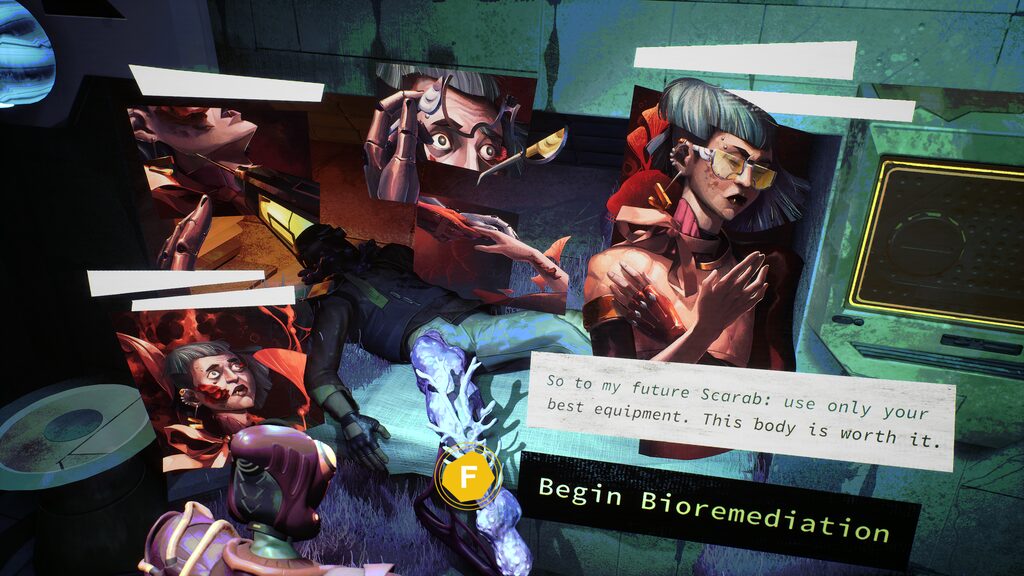
For Ambrosia Sky specifically, I’m interested in the way games do and don’t talk about responsibility and what you can and can’t control. And I think part of the way in which we started approaching the death rituals in Ambrosia Sky is about, what can you do when you can’t do anything for somebody? You can’t save everybody, and so how does that kind of manifest in a player’s emotional experience?Â
Kabachek: When I stepped in, there were already some ideas around what we wanted to do. We already knew that Dalia was a specific person with a specific approach and thought about death. We wanted to represent her point of view on approaching these moments, so there’s ideas like really caring about consent and caring about those people that she’s encountering.
I had some really great inspiration from Kait’s game A Mortician’s Tale and accounts of folks doing the real work out there around death and caring for the dead. Trying to distill it into gameplay mechanics was a fascinating challenge of trying to figure out how much interactivity we wanted there to be and how much of it just needed to unfold to the player. Our death ritual levels ended up being entirely centered around that one moment. The build up is part of what makes that moment strong. I think I put it that you had to have met the person before as the player before you get to the point where you are allowed to experience their final moment.
Cook: Death, especially in the queer community, is a particularly touchy subject. More often than not, we’re used to LGBTQ characters being the first on the chopping block – that infamous Bury Your Gays trope. Just considering the nature of your game, yes, there are queer people in your game that have died or are in danger. My thoughts obviously go to Kai, who is a nonbinary character with a chapter revolving around their death ritual, but I think it was very respectfully done. It helps that the death rituals are these very empathetic and reverent memorials, but it’s also powerful that the person who is giving power to their memories is Dalia, a woman who is queer herself.Â
Kabachek: Yeah, thank you so much. Kai’s death ritual was one that I wrote, and it was the first time that I actually got to write words that shipped in a video game. I poured a lot of myself into that character as well. But it was also a huge collaboration, and it was important for all of us to talk about a trans person who gets to reshape their life and their body into a place that they love and appreciate. So it was really important for us that they’re happy with who they are and what they’ve done.
Tremblay: I think a big thing too is respecting people in death. Something I really grappled with while writing A Mortician’s Tale was that people really don’t always respect people’s identities or lives when they’ve died. Having that moment in the game to express consent around what happens to your body matters. Respect to who the person is even in death is of utmost importance. I really love Kai’s death ritual, and I think Sofy did a wonderful job with it. It respects who they are as a person, both when they were living and how they are now.
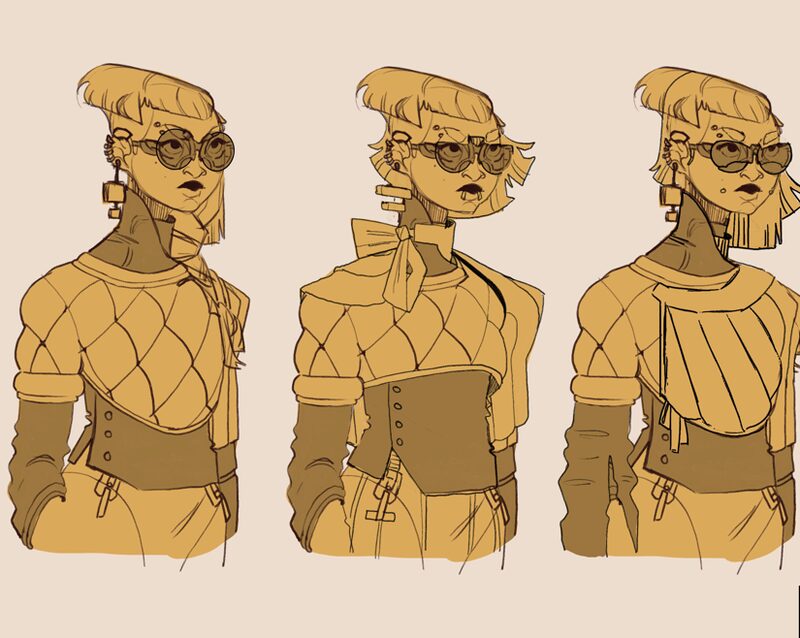
Cook: I actually wrote down a few lines that I appreciated during Kai’s death ritual: “It took a bit of effort to make this body feel like home. I don’t want to leave it behind anymore. It deserves to live on.†At times, even media that intends to be supportive sometimes portrays trans and nonbinary people as inherently self-negative, so I just want to say that giving them that last say about themself and hearing them extend that empathy and acceptance towards themself is something that you so rarely see.
Kabachek: Yes, thank you. Our character artist as well had such a huge hand in building out Kai, like, representing them as well. So yeah, it was a great collaboration.
Cook: And talking about characters like Kai, I want to acknowledge that you’re making a game where many characters, including the playable character, are queer characters. Some of them – Dalia, Maeve – are queer women of color. We are in a time where many of these games are targeted by people who don’t understand the value of diverse storytelling. It’s important to me to recognize how unapologetic Ambrosia Sky is with its queer characters. They’re not hidden away.
Tremblay: We wanted to tell the stories that we wanted to tell. I’m aware of the world we live in, and that’s why it matters to tell these stories and to have our team be able to tell stories that matter to them. Those are our stories to tell. The community and the people who love this game have outweighed any potential whatever else could have been directed at us, and it’s nice having folks validate that people want to hear the stories that we wanted to tell.
Kabachek: It was definitely also an internal question in our team to be like, “No, we’re not tucking this away. This is going to be really evident that these are who these characters are.â€
Cook: My question for you, then, is why Dalia? Was someone like, “I’ve been creating this character and maybe she would work as the protagonist,†or was she a character that the team intentionally wanted to create, like, “Hey, we want to tell specifically a story about a queer woman?â€
Tremblay: I don’t think I’ve ever written a straight character. I’m just thinking I don’t think I’ve ever written a straight person.
Kabachek: I think this is Kait’s default.
Tremblay: Dalia has been a part of Ambrosia Sky since the very first moment. Even the name… She’s just always been who she is.
Kabachek: Dalia was part of the conversation when I was interviewing to join the team. And part of the reason why I wanted to join the team is because I wanted to tell a story about a messy queer woman.
Tremblay: Yeah, and I want to also shout out Bailey Wolfe, who is our voice actor for Dalia. Bailey brought such a warmth, depth, and honesty to Dalia’s emotions that just clicked everything together for her as a character. And the second I heard Bailey’s work, I was like, “Oh, yeah. Of course.â€
Annabelle Cook: I love that Ambrosia Sky doesn’t feel empty, but is also limited in terms of voice acting, so the main way that players are consuming the story is through Dalia’s brief commentary. From meeting the team and reading Soft Rains’ blogI’ve seen how much thought you put into your world building. And when you play the game, there are lore drops about the Clusterlung, the leadership dynamics with Hale, the worshipping of the Leviathan. I have to imagine there’s so much on the cutting room floor that players might never see. How do you pare down a game with so much story and character into the slick three to seven hour playtime that Act One is?
Tremblay: A lot of that is pacing and player cognitive load. How much are we asking the player to think about and engage with at any given time, what’s their emotional playthrough of a space, and where can we actually tell a story in there? Identifying those pockets and places where you are able to deliver a story helps set the parameters for how much you can surface and what you can do.Â
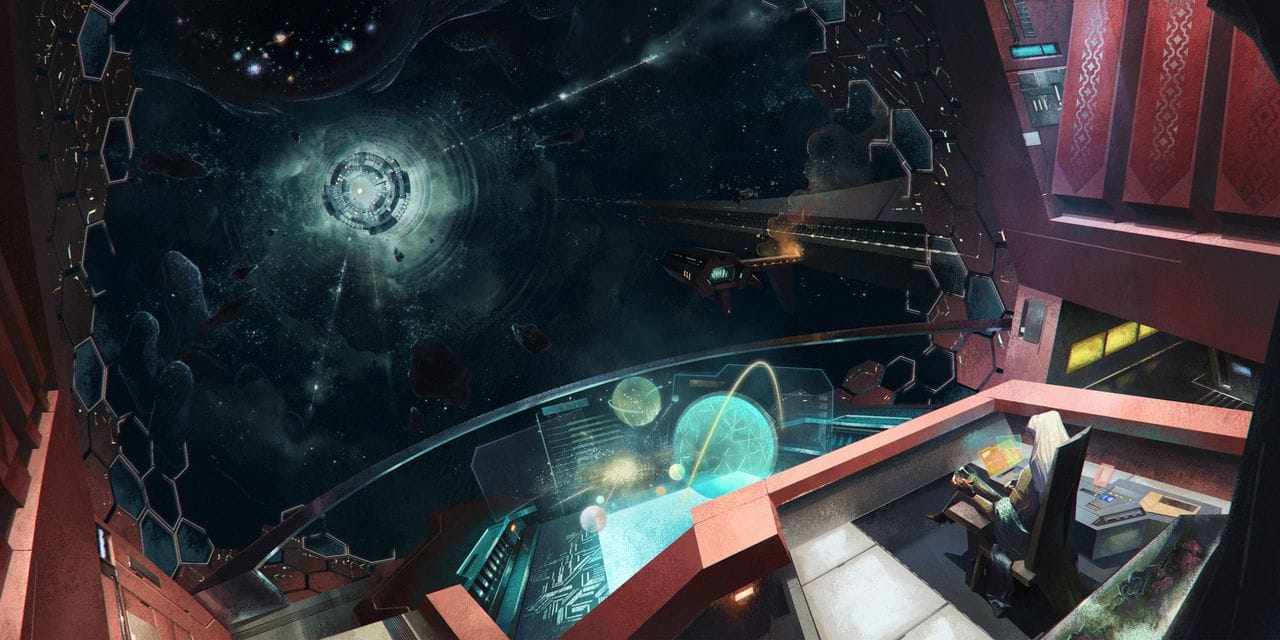
Kabachek: Going back to the FromSoft reference, it’s sometimes about intentionally leaving things vague for the player to fill some of that out. Where do we not need to spell it out? There’s enough for the player to build out a vision in their head.
Cook: Whatever you’re doing is working because, from what I’ve seen from the community that has rallied around this game, it seems very positive. One of my favorite things are the Steam reviews that you’ve cultivated, because half of them are like, “This game is like if you took Dead Space, Metroid Prime, PowerWash Simulator, System Shock…†– I think I saw someone even compared it to Super Mario Sunshine –, “but make it sad and gay.†It’s rare that you get any games in those genres that have LGBTQ characters, so I personally just think it’s so fun that you’re the team that gets to fill those gaps.
Tremblay: Thank you. I love people who show up for our game because they get it. Making art and writing for me is all about connection. I really want to use my writing to connect with other people, and it’s so cool when that happens.
Kabachek: And there was an article that somebody wrote where they talked about all the different immersive sim mechanics and how they were making different decisions and all the terrible things that you can do to Spitters in our game. Just thinking, “These are little toys that I put in this game and this person is playing with them and finding expression through them,†was really, really nice.
Cook: I didn’t know that I needed an immersive sim that was both sad and gay, not that I would ever say no. But speaking of things that are sad and gay, the end of Act One shows Maeve for the first time, who is alive but sick. It’s a good way to set up Act Two with higher stakes, but also now we have to wait until Act Two to find out whether my sad and gay game will also end in doomed lesbians! Come on!
Tremblay: Oh, you will find out.
Cook: I know that Act Two is coming out soon, so congratulations on that. But I’m curious, just thinking about the development cycle regarding the staggered release for Act One and Act Two… What was kind of the thought process in splitting up Act One and Act Two rather than releasing them all in one go?
Tremblay: Episodic storytelling in games is something that I’m really interested in – being able to have something that’s out there and then you can see what folks are reacting to. Game development cycles are also so long, so having that validation and feedback can really help buoy you through a lot. The structure enabled us to make sure that we’re developing in a way that’s sustainable for the team so we can put out quality work that we are proud of, but also engage with the community at the same time.
Kabachek: We really felt we had a good polished experience, and even if it had a cliffhanger, it still had a story arc that made sense, that stood well on its own. And we knew we could deliver on that cliffhanger as well.
Cook: What did work look like for Act Two? Did you have everything plotted out and it was full speed ahead to polish it up, or was it flexible in terms of which direction you would go, maybe based on audience reaction?
Tremblay: There was a lot we already knew we wanted to do. We’ve known where the story was going since more or less the moment we started on this game. And so from the story side, it was just, “I know what I’m writing next, let’s get going.†Then the community feedback was helpful for the things they wanted to see as well, and these are things we care about from gameplay. A lot of it came down to just validating what we wanted to do.Â
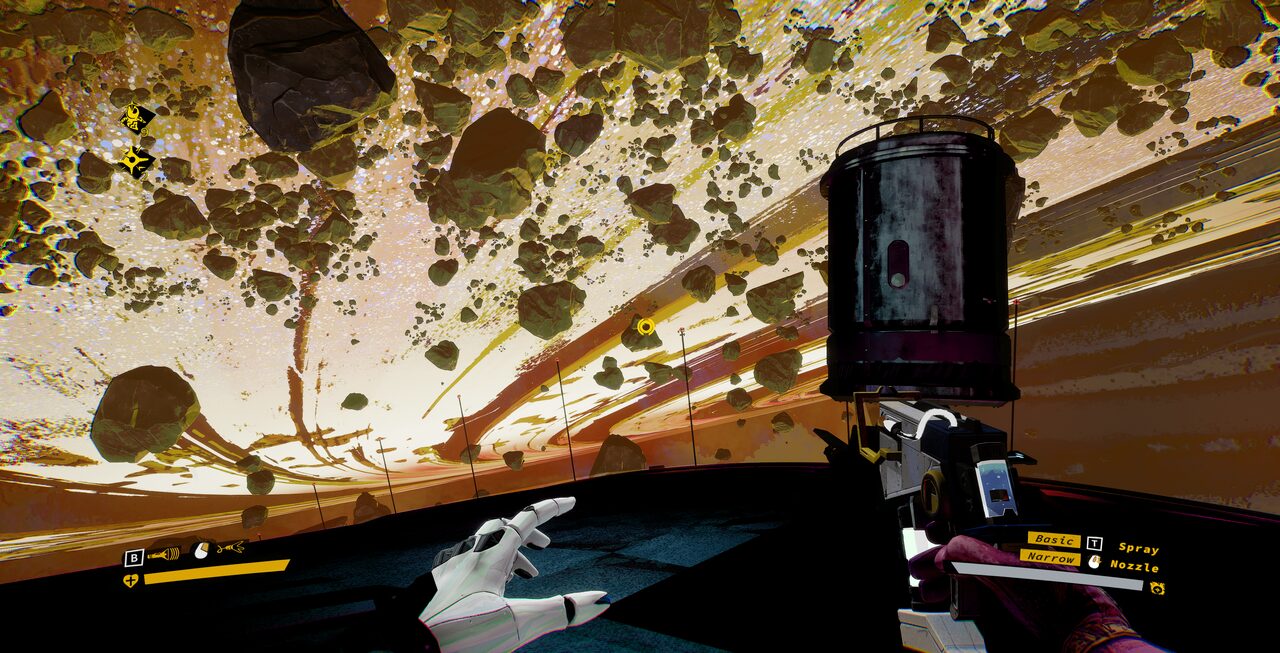
Kabachek: We wanted to deepen the systems, but having the game out there and getting that feedback helped guide us towards how specifically we wanted to deepen those systems. Like, what kind of choices can we make that we know are empowering players in the way that they’re playing the game?
Cook: I know most details for Act Two are still under wraps, but I was curious: if you had to describe your guiding principles or themes – either for story or gameplay – for Act Two, what would they be? What can players expect to feel or be invested in?
Kabachek: For gameplay, I would say player self-expression. What mechanics can be introduced so players can find their own way of playing the game?
Tremblay: Yeah, Act Two is the conclusion of Dalia’s story, and so for that, I think one of the big guiding principles for me was self-forgiveness. Closure, acceptance – how can we get Dalia to a place where she forgives herself for having left her home? Whether or not she is able to accept the decisions she’s made in her past, who she is now, and all that kind of stuff. Thematically, she’s going to go through it. There’s still some things she has to reconcile.
Purchase Ambrosia Sky: Act One and receive Act Two as a free update on August 6th, 2026. For updates on Soft Rains and Ambrosia Sky, check out their website and Bluesky.
Keep up with Misfit Theories on LinkedIn, Instagramand Youtube to be notified about their future projects.