For the big interview on “Tout est politique”, Nathalie Saint-Cricq and Sonia Chironi welcome Jean-François Colosimo on Tuesday, April 28th. The historian of religions and general director of Cerf Editions elaborates on the war in Iran and its two months of deadlock.
Sonia Chironi: Jean-François Colosimo, you say that the neo-emperors want the death of the West? Jean-François Colosimo: I don’t believe the West actually exists. In the end, I’m a bit relieved about that: Donald Trump truly emphasizes the fact that the United States has the same religious and fanatical construction as these neo-empires. Donald Trump has freed us from the illusion of the Atlantic Alliance. Because before, for these neo-emperors, hitting the West meant hitting the United States and Europe. But since hitting the United States is a tad complicated, it meant hitting Europe. It liberates us from a form of illusion. We realized that if we wanted to be independent and free, which is very important, we have to rely on ourselves and stop thinking that one day when we grow up, we would all be Americans. I believe that’s over now.
Now, the cultural blindness because they didn’t understand that the Iranians were Shiite, meaning they had a vision of history, an open vision, awaiting the return of the hidden imam, the Mahdi, the Messiah, hence they have a sense of martyrdom, suffering, which is a true culture for them. And they also didn’t understand that we have to deal with Iranian leaders who all grew up in the context of the famous Iran-Iraq war, which Iran always saw as a war provoked by the West against the regime. They are all septuagenarians. They all fought in the war. They were born in war and govern a regime that is an insurgent regime. By that I mean it’s a regime that lives through constant revolution. When you attack a regime like that with men who have nothing to lose since their life is behind them (…) in that case, you approach it differently.
Nathalie Saint-Cricq: Does this mean that you consider us completely, we, democracies, disarmed because we don’t have the fuel that makes others work and sustain them? Do you consider in the future initiation that we, democracies, Europeans, are weak compared to the Russians, for example, who at the same time hold the regime with an iron hand, compared to the Chinese who are not asked for their opinion, or compared to the theocracies driven by a faith we don’t have? Jean-François Colosimo: All these empires have rebuilt themselves on a totalitarian conception of religion. You see that Putin restores the monasteries that Stalin dynamited, Erdogan re-establishes the Muslim cult in Hagia Sophia which was a museum. As for us, we don’t have this way of turning “the opium of the people” into tyrants’ amphetamine. That’s what they all do.
But we still have a real problem, it’s not about going to church, it’s not about becoming good Catholics or good Protestants. It’s about the whole issue of the foundation of human rights. Human rights exist, but to establish them, they should not only be based on the fact that it’s better to have them than not have them. There should be a form of relationship, a form of transcendence for which one could die.
Because the question is there. The difference between them and us is that they have people who are capable of dying for the ideas we have. Look at those women in Tehran. They are capable of facing the guns to ask for what? Life, freedom. And be complete women. They don’t want to become Californians, but they have courage. Where is ours compared to theirs?
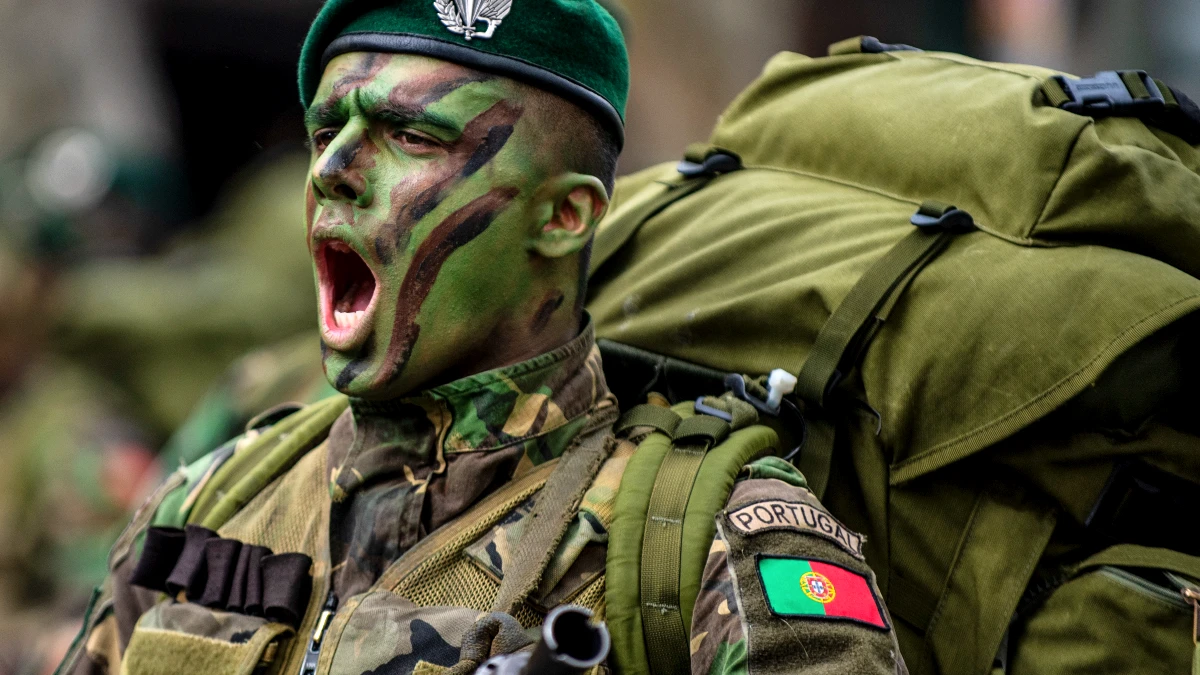
Nathalie Saint-Cricq: I took quotes from Fabien Mandon, chief of staff of the armies at the time, who was strongly criticized because he said that if we were not capable of accepting to lose our children or to suffer economically because priorities would go to defense production, then we are at risk. Sonia Chironi: He said: “What we lack is the soul to accept pain, to protect who we are. If our country collapses, because it’s not ready to lose its children, to suffer economically because priorities will go to defense production, then we are at risk.” Jean-François Colosimo: I think where the chief of staff was right is that we no longer have that collective impulse, for the common historical being. But we would have it, for example, for our family. I believe that any mother would be willing to risk her life to defend her children. So, at that level, it goes without saying.
It no longer goes without saying at the level of the community of destiny. And that’s the dramatic part, because a mother can defend her children against attackers, that’s great, but when it’s from country to country, when the aggressor is Russia or China or another power, there has to be a bond, right? This bond is needed now, but it may come back very quickly. I trust our youth. I think they are much more aware of the dangers of the world and they are much more aware of what they don’t want to become, namely slaves, submissive, than what we might think.


/2026/06/21/6a370dbad98f6172177006.jpg "Coupe du monde 2026 : lAllemagne renverse la Côte dIvoire en toute fin de rencontre et sort de poules pour la première fois depuis 2014")