On April 28, 2026, the United Arab Emirates left OPEC – a decision that reflects a long-term strategy: maximizing oil revenues, investing heavily in American LNG, and establishing themselves as a key player in a new energy geopolitics where addition outweighs substitution.
By entering the capital of Rio Grande LNG in Texas and investing in the Mediterranean gas basin, the UAE is transforming the petrodollar into a tool of diplomacy and arming themselves against their primary threat: Iran, which has launched 2,819 attacks against them since the beginning of 2026.
The Abraham Accords, far from being a simple peace treaty, are the diplomatic crystallization of this new energy geopolitics – demonstrating that while the EU dreams of transition, Abu Dhabi maximizes, invests, and asserts itself.
1. The logic of the last barrel and the reality of energy addition
On April 28, 2026, the United Arab Emirates (UAE) slammed the door on OPEC, effective May 1. This is not just another episode in the oil saga, but a geopolitical earthquake. Why? Because the UAE, through ADNOC, realized the era of the cartel was over. Since the July 2021 dispute over OPEC+ quotas, Abu Dhabi has been denouncing the injustice of a production cap set at 3.168 million barrels per day (Mb/d – 2017 level), while their actual capacities now hover around 5 Mb/d due to massive investment plans and reserves of 120 billion barrels.
The logic is simple: why give up $50 billion in additional annual revenue to support quotas that benefit less efficient members? The UAE wants to sell every barrel they can now that there are so many new producers.
It is important to remember a truth that European ideologues refuse to see: there is no energy transition, only energy addition. Since the oil shocks, wind and solar power only represent 3% of global primary energy (5% in the EU), while fossil fuels still account for 87% of global demand.
The IEA’s prophecy about peak oil demand is not based on physical and economic reality. The UAE, being pragmatic, is betting that demand will remain strong for much longer than Brussels, Strasbourg, or Paris imagine. This is the cold rationality of the UAE, where the EU is trapped in utopia.
There is no energy transition, only energy addition. Since the oil shocks, wind and solar power only represent 3% of global primary energy, while fossil fuels still account for 87% of global demand.
The US President has welcomed the UAE’s decision to leave OPEC, noting that it will help lower oil and fuel prices. He also acknowledged the current challenges facing the organization.
American analysts believe that this exit will increase global oil production and downward pressure on prices. It will also weaken the determination of remaining members to comply with formal production quotas, already considered to have limited efficiency, while deepening the political divide between Saudi Arabia and the UAE. The organization is expected to formally remain intact, even though the effectiveness of its quota mechanisms will be significantly reduced.
This argument deserves clarification. A drop in oil prices does not necessarily disadvantage a high-capacity producer: oil revenues do not depend solely on price, but on price multiplied by volume. For a country whose production is artificially constrained by quotas, freeing up volumes more than compensates for the drop in unit price. Thus, the UAE, by increasing its production from 3.5 to 5 Mb/d – a 43% rise – can absorb a significant price drop while increasing its overall revenue. Maximizing total revenue, rather than defending marginal prices, is Abu Dhabi’s compass.
The ongoing closure of the Strait of Hormuz has blocked nearly two Mb/d of offshore Emirati production, limiting their capacity to increase supply in 2026. Even after the reopening of the strait, a return to previous production levels could take up to six months.
The concrete impact of the UAE’s withdrawal on supply dynamics is expected to be more prominent from 2027 onwards. If tensions between the UAE and OPEC intensify over market shares, medium-term oil prices could drop significantly.
This withdrawal is generally interpreted not as a response to current conditions, but as a long-term strategic repositioning, reflecting years of tensions between Abu Dhabi’s capacity expansion ambitions and the constraints imposed by collective quota management. By breaking free from this framework, the UAE positions itself in a competitive logic based on its production capabilities. In the long run, the weakening of OPEC+ as a supply coordination mechanism could amplify price volatility and downside risks compared to previous cycles.
2. The UAE and American LNG: petrodollar diplomacy against Aramco’s strategy
The UAE is not only maximizing its oil revenues. It is also investing heavily in LNG, and not just anywhere: in the United States, the heart of the new global gas market. ADNOC struck a major deal by taking an 11.7% stake in the Rio Grande LNG project in Texas (Brownsville), a behemoth worth $18.4 billion with a capacity of 17.6 million tons per year (Mt/y), making it the first Gulf NOC to hold a significant share in an American LNG export terminal. Mubadala, another financial arm of Abu Dhabi, owns 5.9% of NextDecade, the parent company of the project.
Other Middle Eastern giants are also on the move. The Golden Pass LNG project (Sabine Pass, Texas), with a $10 billion investment, is owned by QatarEnergy (70%) and ExxonMobil (30%) – they exported their first cargo in late April 2026. Aramco, on the other hand, is building its American LNG strategy differently: with 20-year supply agreements with NextDecade (1.2 Mt/y), advanced negotiations on Port Arthur LNG Phase 2, a contract with Commonwealth LNG, and an established goal of a 20 Mt/y LNG portfolio.
Why this rush towards American LNG? For three major reasons:
- To secure access to flexible supply chains in the Atlantic, away from the vulnerabilities of the Strait of Hormuz;
- To align with American power, turning the petrodollar into a tool of diplomacy and security and becoming a partner in the new energy geopolitics;
- To capture the added value of a globally expanding gas market, as LNG becomes the new geopolitical currency.
The UAE, as pioneers, secure a prominent position in the gas big game, while Aramco moves more cautiously. This is the new energy diplomacy: investing in American infrastructure means buying security, influence, and resilience all at once, while showcasing fossil pride.
3. The UAE and the Abraham Accords: Iranian threat, Arab realism, and energy diplomacy
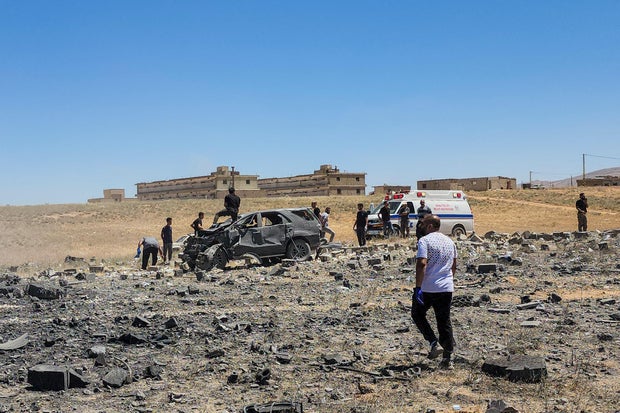
In the Middle Eastern theater, the UAE has become Iran’s favorite target. The figures speak for themselves: since the beginning of 2026, the UAE has been hit with 2,256 drone attacks and 563 missiles (totaling 2,819 systems), compared to 723 for Saudi Arabia – nearly four times as many. The attack by the Houthis on Abu Dhabi in January 2022 (resulting in 3 deaths, damage to ADNOC properties, and the international airport) marked a turning point: for the first time, the UAE publicly acknowledged civilian casualties on its soil. Relations between Iran and the UAE are fractured, and their restoration could take decades.
Why this Iranian obsession with the UAE? The Abraham Accords have made the UAE a “frontline state” in the American-Israeli security architecture. Al Dhafra Air Base hosts American F-35s and thousands of Western troops. The UAE is the financial and commercial hub of the Gulf: hitting Dubai or Abu Dhabi would shake global confidence. Military support for anti-Houthis in Yemen: the UAE pays the price for its regional involvement. The Fujairah terminal, outside the Strait of Hormuz, is a prime target because it symbolizes the energy resilience of the UAE.
Iran practices hybrid warfare: proxy attacks (Houthis, IRGC militias), plausible deniability, calibrated escalation. Energy becomes a geopolitical weapon, and the UAE, with its modernity and openness, is both a showcase and a Achilles’ heel of the Gulf.
The Abraham Accords (September 2020) are more than a peace treaty. They are the diplomatic crystallization of the new energy geopolitics: the end of ideology, the triumph of realism.
The Abraham Accords (September 2020) are more than a peace treaty. They are the diplomatic crystallization of the new energy geopolitics. Why? Because they seal a rational alliance between the UAE, Israel, Bahrain, Morocco, Sudan – and now Kazakhstan – around three axes:
- The Iranian threat: the common enemy unites the coalition, strengthened by Israel’s integration into the US Central Command and military cooperation (Israel provided antimissile batteries to the UAE in 2022);
- The economic revolution: UAE-Israel trade has grown from $200 million in 2020 to over $3 billion in 2024, with more than $5 billion in mutual investments;
- Energetic cooperation: the East Mediterranean Gas Forum (EMGF) connects Israel, the UAE, Egypt, Jordan, Greece, Cyprus, Italy, and France in a regional gas architecture.
For the UAE, the energy dimension of the Abraham Accords is also manifested in the Israeli Exclusive Economic Zone: in 2021, Mubadala Petroleum, the petroleum arm of Abu Dhabi’s sovereign wealth fund, acquired a 22% stake in the Tamar offshore gas field for over a billion dollars – one of the largest transactions ever concluded between an Israeli entity and an Arab entity; then in 2023, ADNOC partnered with BP to formulate a joint offer of $4 billion to acquire 50% of NewMed Energy, the main shareholder (45%) of the massive Leviathan gas field, with estimated recoverable reserves of 22 trillion cubic feet – this offer, hampered by the military escalation of 2023-2024, nonetheless demonstrates Abu Dhabi’s ambition to establish itself as a key player in the Eastern Mediterranean gas basin.
But the most important aspect is elsewhere: the signatory Arab states have shifted the Palestinian cause to the background, prioritizing economic development, energy revenue maximization, and technological modernization. The Islamic Republic of Iran cannot tolerate this reality, which goes against its revolutionary creed and instrumentalization of the Palestinian cause as a leverage for influence in the Arab world. This marks the end of ideology and the triumph of realism. The United States, as the guarantor of regional security, has also become an energy supplier (LNG) and the architect of this new Pax Energetica.
4. Conceptual framework: the new geopolitics of energy, or the revenge of reality
The new geopolitics of energy marks the end of European illusions about the “transition”. It is the era of addition, not substitution. The Gulf states understood this before everyone else: as long as fossil fuels account for 87% of global demand, with solar and wind power capped at 3% despite 50 years of subsidies, the demand for oil and gas will remain strong.
In this context, the UAE’s strategy is ruthlessly rational:
- Maximize fossil revenues while the window is open;
- Invest in flexible and global LNG to adapt to volatility and bypass regional vulnerabilities;
- Align with American power, both militarily and energetically;
- Use energy as a diplomatic lever, through the Abraham Accords and regional cooperation;
- Anticipate the fragmentation of traditional alliances (OPEC, Arab League) in favor of alliances based on economic and technological interests.
The EU, trapped in its green dogmas, finds itself in an energy and geopolitical impasse. The UAE, on the other hand, moves forward with uncovered faces, without illusions, but with ambition and clarity. They embody the revenge of reality over ideology.
The United Arab Emirates, prototype of the new energy power
The United Arab Emirates is no longer just an oil exporter. They are a global player, a LNG strategist, a pioneer of energy diplomacy, a target and resilient in the face of Iranian hybrid warfare, and an architect of a new regional alliance where energy, technology, and security are intertwined. The Abraham Accords are the manifesto of this silent revolution: in the new geopolitics of energy, he who controls flows and innovation controls the fate of nations.
In conclusion, while the EU dreams of a transition that does not exist, the UAE maximizes, invests, allies, and asserts itself. This is the true lesson of the new geopolitics of energy. By leaving OPEC, investing in American LNG, resisting Iranian attacks, and forging the Abraham Accords, the United Arab Emirates embody and demonstrate the reality of the 21st-century new energy geopolitics. Far from the illusions of the “transition”, they practice addition, diversification, and the diplomacy of reality. This is the lesson the EU would do well to contemplate.
/2026/06/16/6a30e890a0c81564235057.jpg "Environ \"120 millions de barils encore coincés\" dans le détroit d'Ormuz, selon un expert")